Green manure
Green Manure
Green manure refers to a type of cover crop grown primarily to add nutrients and organic matter to the soil. Unlike fertilizer, which is directly applied to promote plant growth, green manure crops are sown to be incorporated into the soil to improve its overall structure and fertility. This practice is an integral part of sustainable agriculture, organic farming, and conservation tillage systems.
Overview[edit]
Green manure crops are typically fast-growing plants such as legumes, grasses, or other rotational crops that can be cut and then worked into the soil. Legumes are particularly valued as green manures because they have the ability to fix atmospheric nitrogen in the soil, making it available for subsequent crops. This process is facilitated by the symbiotic relationship between the legumes and rhizobia bacteria in their root nodules, converting atmospheric nitrogen into a form that plants can use.
Benefits[edit]
The benefits of using green manure include:
- Soil Fertility: Enhances the nutrient content of the soil, especially nitrogen, through the decomposition of plant material and, in the case of legumes, through nitrogen fixation.
- Soil Structure: Improves soil structure and porosity, which enhances water infiltration and retention, and reduces erosion.
- Weed Control: Suppresses weeds through competition and by providing a physical barrier when used as a mulch.
- Pest and Disease Management: Can help break the cycle of pests and diseases by interrupting their life cycles.
- Biodiversity: Supports a wide range of soil organisms that contribute to soil health.
Types of Green Manure[edit]
There are many species of plants used as green manure, including but not limited to:
- Legumes: Alfalfa, clover, and vetch are common choices for their nitrogen-fixing capabilities.
- Grasses: Rye, oats, and barley are used for their rapid growth and biomass production.
- Brassicas: Plants like mustard and radish can also be used, particularly for their pest control properties.
Incorporation into the Soil[edit]
The timing of incorporation is critical for maximizing the benefits of green manure. The plants are usually cut down at flowering before they set seed and are then incorporated into the soil. This can be done through plowing, digging, or using specialized equipment. The decomposing plant material releases nutrients slowly, improving soil fertility for future crops.
Challenges[edit]
While green manure offers numerous benefits, there are also challenges to its implementation, including:
- Labor and Time: The process of sowing, growing, and incorporating green manure crops requires additional labor and time.
- Water Usage: Green manure crops require water to grow, which might be a concern in areas with limited water resources.
- Pest Habitat: If not managed properly, green manure crops can provide a habitat for pests.
Conclusion[edit]
Green manure is a valuable tool in the sustainable management of agricultural systems. It contributes to soil health, reduces the need for chemical fertilizers, and supports biodiversity. By carefully selecting the appropriate species and managing the incorporation process, farmers and gardeners can reap the benefits of this age-old practice.

This article is a agriculture stub. You can help WikiMD by expanding it!
-
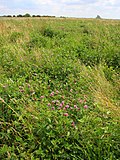 Green manure crop in a field
 -
 Diagram of nitrogen fixation in Fabaceae


Ad. Transform your health with W8MD Weight Loss, Sleep & MedSpa

Tired of being overweight?
Special offer:
Budget GLP-1 weight loss medications
- Semaglutide starting from $29.99/week and up with insurance for visit of $59.99 and up per week self pay.
- Tirzepatide starting from $45.00/week and up (dose dependent) or $69.99/week and up self pay
✔ Same-week appointments, evenings & weekends
Learn more:
- GLP-1 weight loss clinic NYC
- W8MD's NYC medical weight loss
- W8MD Philadelphia GLP-1 shots
- Philadelphia GLP-1 injections
- Affordable GLP-1 shots NYC
|
WikiMD Medical Encyclopedia |
Medical Disclaimer: WikiMD is for informational purposes only and is not a substitute for professional medical advice. Content may be inaccurate or outdated and should not be used for diagnosis or treatment. Always consult your healthcare provider for medical decisions. Verify information with trusted sources such as CDC.gov and NIH.gov. By using this site, you agree that WikiMD is not liable for any outcomes related to its content. See full disclaimer.
Credits:Most images are courtesy of Wikimedia commons, and templates, categories Wikipedia, licensed under CC BY SA or similar.
Translate this page: - East Asian
中文,
日本,
한국어,
South Asian
हिन्दी,
தமிழ்,
తెలుగు,
Urdu,
ಕನ್ನಡ,
Southeast Asian
Indonesian,
Vietnamese,
Thai,
မြန်မာဘာသာ,
বাংলা
European
español,
Deutsch,
français,
Greek,
português do Brasil,
polski,
română,
русский,
Nederlands,
norsk,
svenska,
suomi,
Italian
Middle Eastern & African
عربى,
Turkish,
Persian,
Hebrew,
Afrikaans,
isiZulu,
Kiswahili,
Other
Bulgarian,
Hungarian,
Czech,
Swedish,
മലയാളം,
मराठी,
ਪੰਜਾਬੀ,
ગુજરાતી,
Portuguese,
Ukrainian
