Arbovirus
Italian appetizer consisting of various foods
| Italian cuisine |
|---|
|
|
Antipasto (plural: antipasti) is a traditional Italian appetizer that typically consists of a variety of foods, such as cured meats, cheeses, olives, and vegetables. The term "antipasto" means "before the meal" in Italian, indicating its role as a starter to stimulate the appetite before the main courses are served.
Components
Antipasto can vary widely depending on regional preferences and available ingredients. Common components include:
- Cured meats: Such as prosciutto, salami, and bresaola. These meats are often thinly sliced and served cold.
- Cheeses: Popular choices include mozzarella, parmesan, and gorgonzola.
- Olives: A variety of olives, such as green and black, are often included.
- Vegetables: Grilled or marinated vegetables like artichokes, bell peppers, and zucchini.
- Seafood: In coastal regions, seafood such as anchovies or sardines may be included.
- Bread: Often served with bruschetta or crostini.
Preparation and Presentation
Antipasto is typically arranged on a large platter, allowing diners to select their preferred items. The presentation is important, as it should be visually appealing and inviting. The variety of colors and textures is meant to entice the senses and prepare the palate for the meal to come.
Cultural Significance
In Italian culture, antipasto is more than just a starter; it is a social experience. Sharing an antipasto platter is a way to bring people together, encouraging conversation and enjoyment of food. It reflects the Italian emphasis on hospitality and the joy of eating.
Variations
While the traditional antipasto is rooted in Italian cuisine, variations can be found worldwide, often incorporating local ingredients and flavors. For example, in the United States, antipasto salads may include lettuce and other greens, diverging from the classic Italian version.
Related pages
Gallery
-
 A traditional antipasto platter with a variety of meats and cheeses.
 -
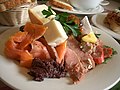 An antipasto platter featuring olives, cheeses, and cured meats.


Ad. Transform your life with W8MD's
GLP-1 weight loss injections special from $29.99 with insurance
|
WikiMD Medical Encyclopedia |
Medical Disclaimer: WikiMD is for informational purposes only and is not a substitute for professional medical advice. Content may be inaccurate or outdated and should not be used for diagnosis or treatment. Always consult your healthcare provider for medical decisions. Verify information with trusted sources such as CDC.gov and NIH.gov. By using this site, you agree that WikiMD is not liable for any outcomes related to its content. See full disclaimer.
Credits:Most images are courtesy of Wikimedia commons, and templates, categories Wikipedia, licensed under CC BY SA or similar.
Translate this page: - East Asian
中文,
日本,
한국어,
South Asian
हिन्दी,
தமிழ்,
తెలుగు,
Urdu,
ಕನ್ನಡ,
Southeast Asian
Indonesian,
Vietnamese,
Thai,
မြန်မာဘာသာ,
বাংলা
European
español,
Deutsch,
français,
Greek,
português do Brasil,
polski,
română,
русский,
Nederlands,
norsk,
svenska,
suomi,
Italian
Middle Eastern & African
عربى,
Turkish,
Persian,
Hebrew,
Afrikaans,
isiZulu,
Kiswahili,
Other
Bulgarian,
Hungarian,
Czech,
Swedish,
മലയാളം,
मराठी,
ਪੰਜਾਬੀ,
ગુજરાતી,
Portuguese,
Ukrainian
