Candied fruit
Candied Fruit

Candied fruit is a type of confectionery that involves preserving fruit by coating it in sugar. This process not only extends the shelf life of the fruit but also enhances its flavor, making it a popular treat in many cultures around the world.
History
The practice of candying fruit dates back to ancient times. It is believed to have originated in the Middle East, where sugar was first cultivated. The technique spread to Europe during the Middle Ages, becoming particularly popular in Italy and France.
Process
The process of candying fruit involves several steps:
- Selection of Fruit: The fruit is carefully selected for quality and ripeness. Commonly candied fruits include orange peel, lemon peel, cherries, and ginger.
- Preparation: The fruit is peeled, if necessary, and cut into desired shapes.
- Blanching: The fruit is blanched in boiling water to soften it and remove any bitterness.
- Candying: The fruit is then simmered in a sugar syrup until it becomes translucent. This can take several days, as the fruit is gradually infused with sugar.
- Drying: After candying, the fruit is dried to remove excess moisture.
Uses
Candied fruit is used in a variety of culinary applications. It is a key ingredient in traditional fruitcake, panettone, and stollen. It can also be used as a garnish for desserts or enjoyed on its own as a sweet treat.
Variations
Different cultures have their own variations of candied fruit. In Italy, candied fruit is known as "frutta candita" and is often used in cassata and cannoli. In China, candied fruit is a popular street food, with hawthorn berries being a common choice.
Related Pages
-
 Candied fruit at La Boquería
 -
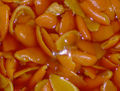 Candied orange

Ad. Transform your health with W8MD Weight Loss, Sleep & MedSpa

Tired of being overweight?
Special offer:
Budget GLP-1 weight loss medications
- Semaglutide starting from $29.99/week and up with insurance for visit of $59.99 and up per week self pay.
- Tirzepatide starting from $45.00/week and up (dose dependent) or $69.99/week and up self pay
✔ Same-week appointments, evenings & weekends
Learn more:
- GLP-1 weight loss clinic NYC
- W8MD's NYC medical weight loss
- W8MD Philadelphia GLP-1 shots
- Philadelphia GLP-1 injections
- Affordable GLP-1 shots NYC
|
WikiMD Medical Encyclopedia |
Medical Disclaimer: WikiMD is for informational purposes only and is not a substitute for professional medical advice. Content may be inaccurate or outdated and should not be used for diagnosis or treatment. Always consult your healthcare provider for medical decisions. Verify information with trusted sources such as CDC.gov and NIH.gov. By using this site, you agree that WikiMD is not liable for any outcomes related to its content. See full disclaimer.
Credits:Most images are courtesy of Wikimedia commons, and templates, categories Wikipedia, licensed under CC BY SA or similar.
Translate this page: - East Asian
中文,
日本,
한국어,
South Asian
हिन्दी,
தமிழ்,
తెలుగు,
Urdu,
ಕನ್ನಡ,
Southeast Asian
Indonesian,
Vietnamese,
Thai,
မြန်မာဘာသာ,
বাংলা
European
español,
Deutsch,
français,
Greek,
português do Brasil,
polski,
română,
русский,
Nederlands,
norsk,
svenska,
suomi,
Italian
Middle Eastern & African
عربى,
Turkish,
Persian,
Hebrew,
Afrikaans,
isiZulu,
Kiswahili,
Other
Bulgarian,
Hungarian,
Czech,
Swedish,
മലയാളം,
मराठी,
ਪੰਜਾਬੀ,
ગુજરાતી,
Portuguese,
Ukrainian
