B. F. Skinner: Difference between revisions
CSV import |
CSV import Tags: mobile edit mobile web edit |
||
| Line 31: | Line 31: | ||
[[Category:University of Minnesota faculty]] | [[Category:University of Minnesota faculty]] | ||
{{psychology-stub}} | {{psychology-stub}} | ||
<gallery> | |||
File:B.F. Skinner at Harvard circa 1950 (cropped).jpg|B. F. Skinner at Harvard circa 1950 | |||
File:BF Skinner Grave.JPG|B. F. Skinner Grave | |||
File:Skinner teaching machine 01.jpg|Skinner Teaching Machine | |||
</gallery> | |||
Latest revision as of 06:17, 3 March 2025
B. F. Skinner (1904–1990) was an American psychologist and behaviorist who developed the theory of operant conditioning. He is considered one of the most influential psychologists of the 20th century.
Early life and education[edit]
Burrhus Frederic Skinner was born on March 20, 1904, in Susquehanna, Pennsylvania. He attended Hamilton College in New York, where he developed an interest in literature and writing. After graduating in 1926, Skinner spent a year trying to become a professional writer before deciding to pursue a career in psychology.
Skinner enrolled in the Harvard psychology program in 1928, where he studied under William James and Edward Thorndike. He received his Ph.D. in 1931 and remained at Harvard as a researcher until 1936.
Career and research[edit]
In 1936, Skinner accepted a position at the University of Minnesota, where he developed the concept of operant conditioning. This theory, which is based on the idea that behavior is determined by its consequences, became a fundamental aspect of behavioral psychology.
Skinner's most significant contribution to psychology was the Skinner box, a device he invented to study animal behavior. The Skinner box allowed Skinner to observe how animals respond to different types of reinforcement and punishment.
In addition to his work on operant conditioning, Skinner also conducted research on verbal behavior and developed a teaching machine that used his principles of learning.
Legacy[edit]
Skinner's theories have had a profound impact on both psychology and education. His work on operant conditioning has been used to develop effective teaching methods and to treat behavioral problems. Despite some criticism, Skinner's theories remain a significant part of the field of psychology.
See also[edit]
References[edit]
<references />

This article is a psychology-related stub. You can help WikiMD by expanding it!
-
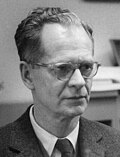 B. F. Skinner at Harvard circa 1950
 -
 B. F. Skinner Grave
 -
 Skinner Teaching Machine
.jpg)


