Edward Thorndike
Edward Lee Thorndike (August 31, 1874 – August 9, 1949) was an American psychologist who spent nearly his entire career at Teachers College, Columbia University. His work on Comparative psychology and the learning process led to the theory of connectionism and helped lay the scientific foundation for modern educational psychology.
Early life and education[edit]
Edward Lee Thorndike was born on August 31, 1874, in Williamsburg, Massachusetts. Thorndike was interested in animal behavior from a young age, which influenced his later work in psychology. He attended Wesleyan University before transferring to Harvard University, where he earned his bachelor's degree in 1895. He later earned his master's degree in 1897 and a Ph.D. in 1898, both from Columbia University.
Career[edit]
Thorndike's career was largely spent at Teachers College, Columbia University, where he worked from 1899 until his retirement in 1940. His work at the college helped establish the field of educational psychology.
Thorndike's research focused on animal behavior and learning theory. His most significant contribution to these fields was the development of the theory of connectionism, which posits that learning is the result of associations forming between stimuli and responses. This theory influenced the development of behaviorism, a major school of thought in psychology.
Legacy[edit]
Thorndike's work has had a lasting impact on the field of education. His theories are still used in the development of educational materials and teaching strategies. His work also influenced other prominent psychologists, including B.F. Skinner and John B. Watson.
See also[edit]
References[edit]
External links[edit]
 | This article about a psychologist is a stub. You can help WikiMD by expanding the page. |
-
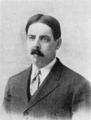 Edward Lee Thorndike
 -
 Original "Puzzle Box" Apparatus Design


Medical Disclaimer: WikiMD is for informational purposes only and is not a substitute for professional medical advice. Content may be inaccurate or outdated and should not be used for diagnosis or treatment. Always consult your healthcare provider for medical decisions. Verify information with trusted sources such as CDC.gov and NIH.gov. By using this site, you agree that WikiMD is not liable for any outcomes related to its content. See full disclaimer.
Credits:Most images are courtesy of Wikimedia commons, and templates, categories Wikipedia, licensed under CC BY SA or similar.
Translate page: - East Asian
中文,
日本,
한국어,
South Asian
हिन्दी,
தமிழ்,
తెలుగు,
Urdu,
ಕನ್ನಡ,
Southeast Asian
Indonesian,
Vietnamese,
Thai,
မြန်မာဘာသာ,
বাংলা
European
español,
Deutsch,
français,
Greek,
português do Brasil,
polski,
română,
русский,
Nederlands,
norsk,
svenska,
suomi,
Italian
Middle Eastern & African
عربى,
Turkish,
Persian,
Hebrew,
Afrikaans,
isiZulu,
Kiswahili,
Other
Bulgarian,
Hungarian,
Czech,
Swedish,
മലയാളം,
मराठी,
ਪੰਜਾਬੀ,
ગુજરાતી,
Portuguese,
Ukrainian

