Total mixed ration: Difference between revisions
CSV import |
CSV import |
||
| Line 31: | Line 31: | ||
[[Category:Livestock]] | [[Category:Livestock]] | ||
[[Category:Animal feed]] | [[Category:Animal feed]] | ||
<gallery> | |||
File:Feeding_TMR.JPG|Feeding TMR | |||
File:Cows_eating_TMR.JPG|Cows eating TMR | |||
</gallery> | |||
Latest revision as of 11:50, 25 February 2025

Total Mixed Ration (TMR) is a method of feeding livestock that combines all forages, grains, protein feeds, minerals, vitamins, and other feed ingredients into a single feed mix. This method ensures that each bite of feed consumed by the livestock contains all the required nutrients, thereby preventing selective eating and promoting uniform growth and health among the animals. TMR is widely used in the dairy farming and beef cattle industries to optimize animal nutrition and improve feed efficiency.
Composition[edit]
A Total Mixed Ration consists of various ingredients, each serving a specific nutritional purpose. The primary components include:
- Forages: High-fiber materials such as hay, silage, and straw that are essential for the rumen health of ruminant animals.
- Grains: Energy-rich feeds like corn, barley, and oats that provide the necessary calories for the animals.
- Protein Feeds: Sources of protein such as soybean meal, canola meal, and cottonseed meal to support growth and milk production.
- Minerals and Vitamins: Essential for preventing deficiencies and supporting overall health and productivity.
- Supplements: Ingredients like buffers and yeast that can enhance rumen function and feed utilization.
Benefits[edit]
The implementation of a Total Mixed Ration offers several benefits:
- Improved Nutrient Intake: Ensures that animals receive a balanced diet with every meal, leading to better health and productivity.
- Increased Milk Production: Dairy cows fed with TMR often show an increase in milk yield due to the optimized nutrition.
- Reduced Feed Waste: Mixing all ingredients into a single ration reduces the chances of selective feeding and feed waste.
- Better Feed Efficiency: TMR can improve the efficiency of feed conversion to milk or meat, making it a cost-effective feeding strategy.
Challenges[edit]
While TMR offers numerous advantages, there are also challenges associated with its implementation:
- High Initial Investment: The equipment needed for mixing and delivering TMR can be costly.
- Management Intensive: Requires careful formulation, preparation, and monitoring to ensure that the ration remains consistent and meets the nutritional needs of the livestock.
- Feed Storage and Quality: Maintaining the quality of stored feed ingredients is crucial to prevent spoilage and ensure the effectiveness of the TMR.
Conclusion[edit]
Total Mixed Ration is a comprehensive feeding strategy that, when properly implemented, can significantly enhance the productivity and health of livestock. By providing a balanced and consistent diet, TMR helps in optimizing the nutritional intake of animals, leading to improved feed efficiency and production outcomes. Despite the challenges, the benefits of TMR make it a valuable practice in modern animal agriculture.
-
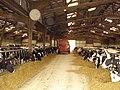 Feeding TMR
 -
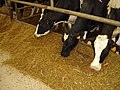 Cows eating TMR

