Silage
Silage is a type of fodder made from green foliage crops which have been preserved by acidification, achieved through fermentation. It can be fed to ruminants (cud-chewing animals like cattle and sheep) or used as a biofuel feedstock for anaerobic digesters. It is fermented and stored in a process called ensiling, ensilage or silaging, and is usually made from grass crops, including maize, sorghum or other cereals, using the entire green plant (not just the grain).
History[edit]
The fermentation of silage was discovered by the French biologist Henri Nestlé in the 19th century. It was first used as a method of preserving the freshness of summer grass for winter feed for animals. Since then, the process has been refined and developed, and is now used worldwide.
Process[edit]
The process of creating silage involves several steps. First, the crop is harvested while it is still green and full of sap. It is then chopped into small pieces, which are packed tightly into a silo, a pit in the ground, or a plastic bag, and sealed to exclude air. The crop then ferments in its own juices, producing lactic acid which pickles the plant material and prevents it from rotting.
Uses[edit]
Silage is primarily used as animal feed. It is highly nutritious and easily digestible, making it an excellent source of energy for livestock. It is also used as a biofuel feedstock for anaerobic digesters, which produce biogas that can be used for heating and electricity generation.
See also[edit]
References[edit]

This WikiMD article can only be edited by registered and verified editors. You can log in or register.
-
 Silage
 -
 Cattle feeding on silage
 -
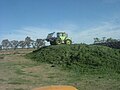 Tractor rolling silage
 -
 Wrapped silage bales
 -
 Making silage at Lowsteads Farm
 -
 Hay bales
 -
 Silage in Lancaster, PA
 -
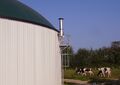 Anaerobic digester for silage
.jpg)


_-_geograph.org.uk_-_1380908.jpg)


Sponsored Health Resource

W8MD Weight Loss, Sleep & MedSpa
Looking for physician-supervised weight loss, semaglutide, tirzepatide, or GLP-1 receptor agonist options? W8MD helps eligible patients in New York City, Brooklyn, New Jersey, Connecticut, Pennsylvania, Delaware, and greater Philadelphia with medical weight loss, sleep medicine, and long-term maintenance support.
GLP-1 specials: Affordable GLP-1 injections NYC and Philadelphia starting from $29.99/week and up for semaglutide with insurance accepted for qualifying visits, and $45/week and up for tirzepatide with insurance accepted for qualifying visits. Self-pay options start from $59.99/week and up for semaglutide and $69.99/week and up for tirzepatide.
Medical weight loss NYC | Affordable GLP-1 injections NYC | Budget GLP-1 weight loss shots Philadelphia | New Jersey medical weight loss | NYC medical weight loss | Philadelphia medical weight loss | Sleep clinic NYC | W8MD's Philadelphia GLP-1 doctor | Weight loss prescriptions NYC
Book a W8MD appointment · View GLP-1 specials
Paid promotional message. Eligibility, pricing, insurance coverage, medication availability, and results vary. Medical evaluation required.

Medical Disclaimer: WikiMD is for informational purposes only and is not a substitute for professional medical advice. Content may be inaccurate or outdated and should not be used for diagnosis or treatment. Always consult your healthcare provider for medical decisions. Verify information with trusted sources such as CDC.gov and NIH.gov. By using this site, you agree that WikiMD is not liable for any outcomes related to its content. See full disclaimer.
Credits:Most images are courtesy of Wikimedia commons, and templates, categories Wikipedia, licensed under CC BY SA or similar.
Translate page: - East Asian
中文,
日本,
한국어,
South Asian
हिन्दी,
தமிழ்,
తెలుగు,
Urdu,
ಕನ್ನಡ,
Southeast Asian
Indonesian,
Vietnamese,
Thai,
မြန်မာဘာသာ,
বাংলা
European
español,
Deutsch,
français,
Greek,
português do Brasil,
polski,
română,
русский,
Nederlands,
norsk,
svenska,
suomi,
Italian
Middle Eastern & African
عربى,
Turkish,
Persian,
Hebrew,
Afrikaans,
isiZulu,
Kiswahili,
Other
Bulgarian,
Hungarian,
Czech,
Swedish,
മലയാളം,
मराठी,
ਪੰਜਾਬੀ,
ગુજરાતી,
Portuguese,
Ukrainian

