York ham: Difference between revisions
CSV import Tags: mobile edit mobile web edit |
CSV import Tags: mobile edit mobile web edit |
||
| Line 33: | Line 33: | ||
[[Category:British cuisine]] | [[Category:British cuisine]] | ||
[[Category:Yorkshire]] | [[Category:Yorkshire]] | ||
== York_ham == | |||
<gallery> | |||
File:Franck_Bail_jambon_d'york.jpg|Franck Bail jambon d'york | |||
File:Breaded-York-Ham.jpg|Breaded York Ham | |||
File:G._Towler.jpg|G. Towler | |||
File:Morrell_advert.jpg|Morrell advert | |||
File:Youatt_image.jpg|Youatt image | |||
File:William_Marlow_R._Ouse.jpg|William Marlow R. Ouse | |||
File:St_Crux.jpg|St Crux | |||
File:Eliza_Acton's_receipt.jpg|Eliza Acton's receipt | |||
</gallery> | |||
Latest revision as of 11:42, 25 February 2025
A type of cured ham originating from York, England
York ham is a traditional cured meat product originating from York, England. It is known for its distinctive flavor and texture, which is achieved through a specific curing process. York ham is a popular choice for various culinary applications, including as a centerpiece for festive meals and as a flavorful addition to sandwiches and salads.
History[edit]
The production of York ham dates back several centuries, with its origins deeply rooted in the culinary traditions of Yorkshire. The region's climate and geography provided ideal conditions for curing meats, and York ham quickly became renowned for its quality and taste. Historically, York ham was a staple in the diets of both the local population and the British aristocracy.
Production Process[edit]
The traditional method of producing York ham involves several key steps:
Selection of Meat[edit]
The process begins with the selection of high-quality pork legs. The meat is typically sourced from specific breeds of pigs known for their flavor and texture.
Curing[edit]
The curing process is crucial to developing the ham's characteristic flavor. The pork legs are rubbed with a mixture of salt, sugar, and various spices. This mixture helps to preserve the meat and enhance its taste. The curing process can take several weeks, during which the ham is regularly turned and monitored.
Drying and Aging[edit]
After curing, the ham is hung to dry in a controlled environment. This drying period allows the flavors to develop further and the texture to become firmer. The aging process can vary in length, with some hams being aged for several months to achieve a more intense flavor.
Culinary Uses[edit]
York ham is versatile and can be used in a variety of dishes. It is often served as a cold cut, sliced thinly and paired with cheese and bread. It can also be used in cooked dishes, such as quiche, omelettes, and pasta dishes, where its rich flavor complements other ingredients.
Comparison with Other Hams[edit]
York ham is often compared to other types of cured hams, such as Parma ham and Serrano ham. While all these hams share similarities in their curing processes, York ham is distinguished by its specific seasoning and the unique climate of Yorkshire, which contributes to its distinct taste.
Related pages[edit]
York_ham[edit]
-
 Franck Bail jambon d'york
 -
 Breaded York Ham
 -
 G. Towler
 -
 Morrell advert
 -
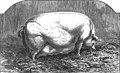 Youatt image
 -
 William Marlow R. Ouse
 -
 St Crux
 -
 Eliza Acton's receipt


