Suet pudding: Difference between revisions
CSV import |
CSV import |
||
| Line 47: | Line 47: | ||
{{British-food-stub}} | {{British-food-stub}} | ||
<gallery> | |||
File:Christmas_pudding.JPG|Christmas pudding | |||
</gallery> | |||
Latest revision as of 11:40, 25 February 2025

Suet pudding is a traditional British steamed or boiled pudding made with suet, which is the hard fat found around the kidneys of cattle and sheep. Suet puddings can be either sweet or savory and have been a staple of British cooking for centuries.
History[edit]
Suet puddings date back to at least the 18th century and were a common dish among the working class due to their inexpensive ingredients and high caloric content. They were often prepared in a pudding cloth or a pudding basin and steamed for several hours.
Ingredients[edit]
The primary ingredient in suet pudding is suet, which is finely chopped or grated. Other common ingredients include:
- Flour
- Breadcrumbs
- Baking powder
- Milk
- Eggs
- Sugar (for sweet puddings)
- Dried fruit (for sweet puddings)
- Meat or vegetables (for savory puddings)
Preparation[edit]
To prepare a suet pudding, the suet is mixed with flour, breadcrumbs, and other dry ingredients. Liquid ingredients such as milk and eggs are then added to form a dough. The dough is placed in a pudding basin or wrapped in a pudding cloth and steamed or boiled for several hours until cooked through.
Varieties[edit]
There are numerous varieties of suet pudding, including:
Sweet Suet Puddings[edit]
- Spotted dick: A steamed suet pudding containing dried fruits such as currants or raisins.
- Christmas pudding: A rich, dark pudding made with suet, dried fruits, and spices, traditionally served during the Christmas season.
Savory Suet Puddings[edit]
- Steak and kidney pudding: A savory pudding filled with diced steak and kidney, often served with gravy.
- Bacon and onion pudding: A savory pudding made with bacon and onions, sometimes including other vegetables.
Cultural Significance[edit]
Suet puddings hold a special place in British culinary history and are often associated with traditional British comfort food. They are commonly served during festive occasions and family gatherings.
Related Pages[edit]
Categories[edit]
This British food-related article is a stub. You can help WikiMD by expanding it.
-
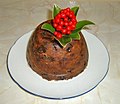 Christmas pudding
