Wheat: Difference between revisions
CSV import |
CSV import |
||
| Line 55: | Line 55: | ||
{{Agriculture-stub}} | {{Agriculture-stub}} | ||
<gallery> | |||
File:Vehnäpelto 6.jpg|Wheat field | |||
File:Triticum aestivum - Köhler–s Medizinal-Pflanzen-274.jpg|Triticum aestivum | |||
File:wheatareal.PNG|Wheat growing areas | |||
File:NHM - Jungsteinzeit Sichel 2.jpg|Neolithic sickle | |||
File:UrukPlate3000BCE.jpg|Uruk plate 3000 BCE | |||
File:Trilla del trigo en el Antiguo Egipto.jpg|Wheat threshing in Ancient Egypt | |||
File:Woman harvesting wheat, Raisen district, Madhya Pradesh, India ggia version.jpg|Woman harvesting wheat in India | |||
File:Polyploid wheat origins.svg|Polyploid wheat origins | |||
File:Naked and hulled wheat.jpg|Naked and hulled wheat | |||
File:USDA wheat.jpg|USDA wheat | |||
File:WheatYield.png|Wheat yield | |||
File:Production of wheat (2019).svg|Production of wheat (2019) | |||
</gallery> | |||
Latest revision as of 01:29, 20 February 2025


Wheat is a grass widely cultivated for its seed, a cereal grain which is a worldwide staple food. The many species of wheat together make up the genus Triticum; the most widely grown is common wheat (Triticum aestivum).
History[edit]
Wheat was one of the first crops to be domesticated by humans. It originated in the Fertile Crescent region of the Near East around 9600 BCE. The domestication of wheat allowed for the development of agriculture and the rise of civilizations.
Botany[edit]
Wheat is an annual plant in the Poaceae family. It grows to a height of 2 to 4 feet. The plant has long, slender leaves and stems that terminate in a cluster of spikelets, each containing several florets.
Types of Wheat[edit]
There are several species of wheat, including:
- Common wheat (Triticum aestivum)
- Durum wheat (Triticum durum)
- Emmer wheat (Triticum dicoccum)
- Einkorn wheat (Triticum monococcum)
- Spelt (Triticum spelta)
Cultivation[edit]
Wheat is grown on more land area than any other food crop. It is a major diet component because of the wheat plant's agronomic adaptability. Wheat is grown from the Arctic to near the equator, but the most suitable climate for wheat production is temperate with moderate rainfall.
Uses[edit]
Wheat is primarily used to make flour, which is then used to produce a wide range of foods including bread, pasta, cakes, and biscuits. Wheat is also used in the production of beer and other alcoholic beverages.
Nutrition[edit]
Wheat is a significant source of carbohydrates and provides multiple essential nutrients, including protein, dietary fiber, B vitamins, and several dietary minerals.
Global Production[edit]
The largest producers of wheat are China, India, Russia, and the United States. Wheat is a key commodity in the global market and is traded internationally.
Diseases and Pests[edit]
Wheat is susceptible to a variety of diseases and pests, including:
See Also[edit]
References[edit]
External Links[edit]


 | This agriculture article is a stub. You can help Wikipedia by adding missing information. |
-
 Wheat field
 -
 Triticum aestivum
 -
 Wheat growing areas
 -
 Neolithic sickle
 -
 Uruk plate 3000 BCE
 -
 Wheat threshing in Ancient Egypt
 -
 Woman harvesting wheat in India
 -
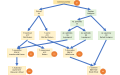 Polyploid wheat origins
 -
 Naked and hulled wheat
 -
 USDA wheat
 -
 Wheat yield
 -
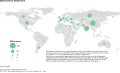 Production of wheat (2019)


.svg)
