Cyamemazine: Difference between revisions
CSV import |
CSV import |
||
| Line 21: | Line 21: | ||
{{medicine-stub}} | {{medicine-stub}} | ||
<gallery> | |||
File:Cyamemazine.svg|Cyamemazine | |||
File:Cyamemazine synthesis.svg|Cyamemazine synthesis | |||
</gallery> | |||
Revision as of 00:55, 20 February 2025
Cyamemazine is an atypical antipsychotic and antidepressant that is used in Europe for the treatment of anxiety and psychosis. It is a derivative of phenothiazine, a class of drugs that includes other antipsychotics such as chlorpromazine and thioridazine.
Pharmacology
Cyamemazine acts primarily as a serotonin antagonist, blocking the action of serotonin at its receptors in the brain. This action is thought to be responsible for its antidepressant and anxiolytic effects. It also has some dopamine antagonist activity, which may contribute to its antipsychotic effects.
Clinical Use
Cyamemazine is used in the treatment of various psychiatric disorders, including schizophrenia, bipolar disorder, and major depressive disorder. It is also used to treat anxiety disorders, including generalized anxiety disorder and panic disorder. In addition to its psychiatric uses, it is sometimes used in the treatment of nausea and vomiting, particularly when these symptoms are caused by other medications.
Side Effects
Like all antipsychotics, cyamemazine can cause a range of side effects. These can include drowsiness, dizziness, dry mouth, and blurred vision. More serious side effects can include tardive dyskinesia, a movement disorder that can be caused by long-term use of antipsychotics, and neuroleptic malignant syndrome, a rare but potentially life-threatening reaction to antipsychotics.
See Also

-
 Cyamemazine
 -
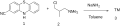 Cyamemazine synthesis


