Check dam: Difference between revisions
CSV import |
CSV import |
||
| Line 50: | Line 50: | ||
[[Category:Water management]] | [[Category:Water management]] | ||
[[Category:Erosion control]] | [[Category:Erosion control]] | ||
<gallery> | |||
File:Viehofen_verbauung.jpg|Check dam in Viehofen | |||
File:Bioswale.jpg|Bioswale with check dam | |||
File:Check_dam_Thadayana.jpg|Check dam in Thadayana | |||
File:Log_Dam_May_Qoqah.jpg|Log dam in May Qoqah | |||
File:Log_dam_in_a_gully_-_NARA_-_286165.tif|Log dam in a gully | |||
File:Log_dam_in_Adawro_river.jpg|Log dam in Adawro river | |||
File:Log_dam_building_in_Adawro.jpg|Log dam building in Adawro | |||
</gallery> | |||
Latest revision as of 11:09, 18 February 2025
Check Dam
A check dam is a small, sometimes temporary, dam constructed across a swale, drainage ditch, or waterway to counteract erosion by reducing water flow velocity. Check dams are typically used in areas where the natural flow of water needs to be slowed down to prevent soil erosion and to promote water infiltration into the ground.
Design and Construction[edit]
Check dams can be made from a variety of materials, including stone, concrete, logs, or even sandbags. The choice of material often depends on the intended permanence of the structure and the resources available.
Materials[edit]
- Stone: Stone check dams are durable and can last for many years. They are often used in permanent installations.
- Concrete: Concrete check dams are also durable and are used in more permanent settings.
- Logs: Log check dams are typically used in temporary situations or in areas where logs are readily available.
- Sandbags: Sandbag check dams are used for temporary erosion control and are easy to install and remove.
Construction Steps[edit]
1. Site Selection: Choose a location where water flow is causing erosion or where water retention is desired. 2. Foundation Preparation: Clear the area of debris and vegetation to ensure a stable foundation. 3. Material Placement: Place the chosen materials across the waterway, ensuring that the center of the dam is lower than the sides to allow overflow. 4. Anchoring: Secure the materials in place to prevent them from being washed away by water flow. 5. Maintenance: Regularly inspect the check dam for damage and make necessary repairs.
Functions and Benefits[edit]
Check dams serve several important functions:
- Erosion Control: By slowing down water flow, check dams reduce the erosive force of water, protecting soil and vegetation.
- Water Infiltration: Slower water flow allows more water to seep into the ground, recharging groundwater supplies.
- Sediment Capture: Check dams trap sediment, which can improve water quality downstream and build up soil in the area.
Applications[edit]
Check dams are used in various settings, including:
- Agricultural Lands: To prevent soil erosion and improve water retention in fields.
- Construction Sites: To control sediment runoff and protect nearby water bodies.
- Watershed Management: As part of larger efforts to manage water resources and prevent flooding.
Environmental Impact[edit]
While check dams can be beneficial for erosion control and water management, they can also have environmental impacts. Improperly designed or maintained check dams can lead to unintended consequences such as:
- Habitat Disruption: Altering water flow can impact aquatic and riparian habitats.
- Water Quality Issues: If not properly managed, check dams can lead to stagnant water, which may affect water quality.
Also see[edit]
Template:Erosion control techniques
| Water management topics | ||||||||
|---|---|---|---|---|---|---|---|---|
This water management related article is a stub.
|
-
 Check dam in Viehofen
 -
 Bioswale with check dam
 -
 Check dam in Thadayana
 -
 Log dam in May Qoqah
 -
 Log dam in a gully
 -
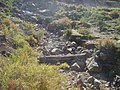 Log dam in Adawro river
 -
 Log dam building in Adawro


