Late harvest wine: Difference between revisions
CSV import Tags: mobile edit mobile web edit |
CSV import |
||
| Line 31: | Line 31: | ||
[[Category:Wine terminology]] | [[Category:Wine terminology]] | ||
{{Wine-stub}} | {{Wine-stub}} | ||
<gallery> | |||
File:Late_harvest_Semillon.jpg|Late harvest Semillon grapes | |||
File:Botrytis_riesling.jpg|Botrytis affected Riesling grapes | |||
File:Tokaj_cellar2.png|Tokaj wine cellar | |||
File:Ice_wine_grapes.jpg|Ice wine grapes | |||
</gallery> | |||
Latest revision as of 05:06, 18 February 2025
Late Harvest Wine is a term used in the wine industry to describe a type of dessert wine that is made from grapes left on the vine longer than usual. The extended ripening period allows the grapes to develop higher sugar levels, which results in a sweeter wine. Late harvest wines are often rich, complex, and high in both sugar and alcohol content.
History[edit]
The practice of making late harvest wine dates back to ancient times. The Romans were known to make a sweet wine called Passum, which was made from grapes that were left on the vine to shrivel and concentrate their sugars. This tradition continued in the Middle Ages, when monks in Germany and France began making late harvest wines as a way to use grapes that were not suitable for regular wine production.
Production[edit]
Late harvest wines are made by leaving the grapes on the vine until they reach a high level of ripeness. This can be achieved through several methods, including noble rot, freeze concentration, and raisining. Each method results in a different style of wine, with varying levels of sweetness, acidity, and complexity.
Styles[edit]
There are several styles of late harvest wine, each with its own unique characteristics. These include:
- Sauternes: A sweet white wine from the Bordeaux region of France, made primarily from Sémillon grapes affected by noble rot.
- Tokaji: A sweet white wine from Hungary, made from grapes affected by noble rot. Tokaji is known for its high acidity, which balances the sweetness of the wine.
- Ice wine: A type of late harvest wine made from grapes that have been frozen while still on the vine. Ice wine is known for its intense sweetness and concentrated flavors.
- Vin Santo: A sweet wine from Italy, made from grapes that have been dried to concentrate their sugars.
Pairing[edit]
Late harvest wines are often served with dessert, but they can also be paired with cheese, foie gras, and spicy food. The high sugar content of the wine can balance the richness of the food, while the acidity can cut through the fat and cleanse the palate.
See also[edit]

-
 Late harvest Semillon grapes
 -
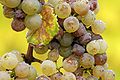 Botrytis affected Riesling grapes
 -
 Tokaj wine cellar
 -
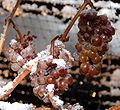 Ice wine grapes


