Lower gastrointestinal bleeding: Difference between revisions
CSV import |
CSV import |
||
| Line 26: | Line 26: | ||
{{Gastroenterology-stub}} | {{Gastroenterology-stub}} | ||
{{Medicine-stub}} | {{Medicine-stub}} | ||
<gallery> | |||
File:Positive_fecal_occult_blood_test.jpg|Positive fecal occult blood test | |||
File:Diverticulosis_2.jpg|Diverticulosis | |||
File:Algorithm_for_lower_GI_Bleed.svg|Algorithm for lower GI bleed | |||
</gallery> | |||
Revision as of 04:16, 18 February 2025
Lower gastrointestinal bleeding (LGIB) is a common medical condition that involves bleeding in the lower gastrointestinal tract. The lower gastrointestinal tract includes the large intestine, rectum, and anus. LGIB can be acute or chronic, and its severity can range from mild to life-threatening.
Causes
The most common causes of LGIB include diverticular disease, angiodysplasia, colitis, anal fissures, and hemorrhoids. Less common causes include colorectal cancer, inflammatory bowel disease, and ischemic colitis. Certain medications, such as nonsteroidal anti-inflammatory drugs (NSAIDs) and anticoagulants, can also increase the risk of LGIB.
Symptoms
The primary symptom of LGIB is the passage of red or maroon-colored blood from the rectum. The blood may be mixed with stool or form clots. Other symptoms can include abdominal pain, anemia due to blood loss, and signs of shock in severe cases.
Diagnosis
Diagnosis of LGIB typically involves a combination of medical history, physical examination, and diagnostic tests. These tests can include colonoscopy, computed tomography (CT) scan, and angiography. In some cases, a capsule endoscopy or double-balloon enteroscopy may be used.
Treatment
Treatment for LGIB depends on the cause and severity of the bleeding. Initial treatment often involves fluid resuscitation to replace lost blood. Medications may be used to stop the bleeding or reduce the risk of further bleeding. In severe cases, surgery may be required.
See also
References
<references />

This article is a gastroenterology stub. You can help WikiMD by expanding it!

-
 Positive fecal occult blood test
 -
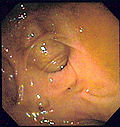 Diverticulosis
 -
 Algorithm for lower GI bleed


