Gising-gising: Difference between revisions
CSV import Tags: mobile edit mobile web edit |
CSV import |
||
| Line 20: | Line 20: | ||
{{Philippine-cuisine-stub}} | {{Philippine-cuisine-stub}} | ||
{{food-stub}} | {{food-stub}} | ||
<gallery> | |||
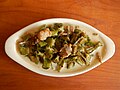
File:Gising-gising.jpg|A dish of Gising-gising, a spicy Filipino vegetable dish. | |||
File:Sigarilyasjf1338.JPG|Sigarilyas, also known as winged bean, used in various Filipino dishes. | |||
File:Cebu_Food_Trip_(11051436566).jpg|A selection of Cebuano food, showcasing local culinary delights. | |||
File:NodularMelanomaEvolution.jpg|A medical image showing the evolution of nodular melanoma. | |||
</gallery> | |||
Revision as of 00:47, 18 February 2025
Gising-gising is a traditional Filipino dish originating from the Nueva Ecija province. The name Gising-gising translates to "wake up, wake up" in English, reflecting the dish's spicy flavor that is said to awaken the senses.
Ingredients and Preparation
Gising-gising is typically made with green beans or winged beans, coconut milk, ground pork, and bird's eye chili. The dish is known for its rich, creamy texture and spicy flavor. The beans are chopped into small pieces and cooked with the ground pork in coconut milk. Bird's eye chili, or other types of hot peppers, are added to give the dish its characteristic heat.
Cultural Significance
Gising-gising is a popular dish in the Philippines, particularly in the province of Nueva Ecija where it originated. It is often served at family gatherings and special occasions. The dish is also commonly found in Filipino restaurants and is a favorite among locals and tourists alike.
Variations
There are several variations of Gising-gising. Some recipes substitute the ground pork with shrimp or fish. Others add additional vegetables such as eggplant or okra. The level of spiciness can also be adjusted according to personal preference.
See Also


-
A dish of Gising-gising, a spicy Filipino vegetable dish.
-
 Sigarilyas, also known as winged bean, used in various Filipino dishes.
 -
 A selection of Cebuano food, showcasing local culinary delights.
 -
 A medical image showing the evolution of nodular melanoma.

.jpg)


