Nasal polyp: Difference between revisions
CSV import |
CSV import |
||
| Line 1: | Line 1: | ||
{{SI}} | |||
{{Infobox medical condition | |||
| name = Nasal polyp | |||
| image = [[File:Polype_nasal.jpg|left|thumb|Nasal polyp]] | |||
| caption = Nasal polyp as seen in the nasal cavity | |||
| field = [[Otorhinolaryngology]] | |||
| synonyms = Nasal polyposis | |||
| symptoms = [[Nasal congestion]], [[runny nose]], [[post-nasal drip]], [[loss of smell]] | |||
| complications = [[Sinusitis]], [[obstructive sleep apnea]] | |||
| onset = Any age, more common in adults | |||
| duration = Chronic | |||
| causes = [[Chronic inflammation]], [[allergies]], [[asthma]], [[cystic fibrosis]] | |||
| risks = [[Aspirin-exacerbated respiratory disease]], [[allergic rhinitis]] | |||
| diagnosis = [[Nasal endoscopy]], [[CT scan]] | |||
| differential = [[Deviated septum]], [[tumors]] | |||
| treatment = [[Corticosteroids]], [[surgery]] | |||
| medication = [[Nasal corticosteroids]], [[oral corticosteroids]] | |||
| frequency = 1-4% of the population | |||
}} | |||
[[File:Paranasal_sinuses_numbers.svg|thumb|Paranasal sinuses]] | |||
[[File:Middle_meatus_polyp.jpg|left|thumb|Middle meatus polyp]] | |||
[[File:Nasal_polyp_25x_H+E_(1).tif|thumb|Nasal polyp 25x H+E]] | |||
[[File:Histopathology_of_sinonasal_inflammatory_polyp_with_mixed_inflammation,_annotated.jpg|left|thumb|Histopathology of sinonasal inflammatory polyp]] | |||
'''Nasal polyps''' are soft, painless, noncancerous growths on the lining of your nasal passages or sinuses. They hang down like teardrops or grapes. They result from chronic inflammation due to asthma, recurring infection, allergies, drug sensitivity or certain immune disorders. | '''Nasal polyps''' are soft, painless, noncancerous growths on the lining of your nasal passages or sinuses. They hang down like teardrops or grapes. They result from chronic inflammation due to asthma, recurring infection, allergies, drug sensitivity or certain immune disorders. | ||
== Causes == | == Causes == | ||
Small [[nasal polyps]] may not cause symptoms. Larger growths or groups of nasal polyps can block your nasal passages or lead to breathing problems, a lost sense of smell and frequent infections. | Small [[nasal polyps]] may not cause symptoms. Larger growths or groups of nasal polyps can block your nasal passages or lead to breathing problems, a lost sense of smell and frequent infections. | ||
Nasal polyps can affect anyone, but they're more common in adults. Medications can often shrink or eliminate nasal polyps, but surgery is sometimes needed to remove them. Even after successful treatment, nasal polyps often return. | Nasal polyps can affect anyone, but they're more common in adults. Medications can often shrink or eliminate nasal polyps, but surgery is sometimes needed to remove them. Even after successful treatment, nasal polyps often return. | ||
== Symptoms == | == Symptoms == | ||
Nasal polyps are associated with inflammation of the lining of your nasal passages and sinuses that lasts more than 12 weeks (chronic rhinosinusitis, also known as chronic sinusitis). However, it's possible | Nasal polyps are associated with inflammation of the lining of your nasal passages and sinuses that lasts more than 12 weeks (chronic rhinosinusitis, also known as chronic sinusitis). However, it's possible — and even somewhat more likely — to have chronic sinusitis without nasal polyps. | ||
Nasal polyps themselves are soft and lack sensation, so if they're small you may not be aware you have them. Multiple or large polyps may block your nasal passages and sinuses. | Nasal polyps themselves are soft and lack sensation, so if they're small you may not be aware you have them. Multiple or large polyps may block your nasal passages and sinuses. | ||
Common signs and symptoms of chronic sinusitis with nasal polyps include: | Common signs and symptoms of chronic sinusitis with nasal polyps include: | ||
* A runny nose | * A runny nose | ||
* Persistent stuffiness | * Persistent stuffiness | ||
| Line 23: | Line 40: | ||
* Snoring | * Snoring | ||
* Frequent nosebleeds | * Frequent nosebleeds | ||
== Treatment == | == Treatment == | ||
Treatment for nasal polyps usually involves medication to reduce the size of the polyp or eliminate it. Medications used to treat nasal polyps include: | Treatment for nasal polyps usually involves medication to reduce the size of the polyp or eliminate it. Medications used to treat nasal polyps include: | ||
* Nasal corticosteroids | * Nasal corticosteroids | ||
* Injectable or oral corticosteroids | * Injectable or oral corticosteroids | ||
* Other medications | * Other medications | ||
If drug treatment doesn't shrink or eliminate nasal polyps, you may need endoscopic surgery to remove polyps and to correct problems with your sinuses that make them prone to inflammation and the development of polyps. | If drug treatment doesn't shrink or eliminate nasal polyps, you may need endoscopic surgery to remove polyps and to correct problems with your sinuses that make them prone to inflammation and the development of polyps. | ||
==Images== | |||
<gallery> | |||
File:Histopathology_of_extranodal_NK-T_cell_lymphoma,_nasal_type.png|Histopathology of extranodal NK-T cell lymphoma, nasal type | |||
File:TSESI.jpg|Nasal polyp | |||
File:Effect_of_Long_Nozzle.jpg|Effect of Long Nozzle | |||
</gallery> | |||
== See Also == | == See Also == | ||
* [[Asthma]] | * [[Asthma]] | ||
* [[Allergies]] | * [[Allergies]] | ||
* [[Chronic Sinusitis]] | * [[Chronic Sinusitis]] | ||
[[Category:Medical Conditions]] | [[Category:Medical Conditions]] | ||
[[Category:Respiratory Diseases]] | [[Category:Respiratory Diseases]] | ||
{{stub}} | {{stub}} | ||
Latest revision as of 12:14, 14 April 2025

Editor-In-Chief: Prab R Tumpati, MD
Obesity, Sleep & Internal medicine
Founder, WikiMD Wellnesspedia &
W8MD's medical weight loss NYC, sleep center NYC
Philadelphia medical weight loss and Philadelphia sleep clinics
| Nasal polyp | |
|---|---|
 | |
| Synonyms | Nasal polyposis |
| Pronounce | N/A |
| Specialty | N/A |
| Symptoms | Nasal congestion, runny nose, post-nasal drip, loss of smell |
| Complications | Sinusitis, obstructive sleep apnea |
| Onset | Any age, more common in adults |
| Duration | Chronic |
| Types | N/A |
| Causes | Chronic inflammation, allergies, asthma, cystic fibrosis |
| Risks | Aspirin-exacerbated respiratory disease, allergic rhinitis |
| Diagnosis | Nasal endoscopy, CT scan |
| Differential diagnosis | Deviated septum, tumors |
| Prevention | N/A |
| Treatment | Corticosteroids, surgery |
| Medication | Nasal corticosteroids, oral corticosteroids |
| Prognosis | N/A |
| Frequency | 1-4% of the population |
| Deaths | N/A |


Nasal polyps are soft, painless, noncancerous growths on the lining of your nasal passages or sinuses. They hang down like teardrops or grapes. They result from chronic inflammation due to asthma, recurring infection, allergies, drug sensitivity or certain immune disorders.
Causes[edit]
Small nasal polyps may not cause symptoms. Larger growths or groups of nasal polyps can block your nasal passages or lead to breathing problems, a lost sense of smell and frequent infections. Nasal polyps can affect anyone, but they're more common in adults. Medications can often shrink or eliminate nasal polyps, but surgery is sometimes needed to remove them. Even after successful treatment, nasal polyps often return.
Symptoms[edit]
Nasal polyps are associated with inflammation of the lining of your nasal passages and sinuses that lasts more than 12 weeks (chronic rhinosinusitis, also known as chronic sinusitis). However, it's possible — and even somewhat more likely — to have chronic sinusitis without nasal polyps. Nasal polyps themselves are soft and lack sensation, so if they're small you may not be aware you have them. Multiple or large polyps may block your nasal passages and sinuses. Common signs and symptoms of chronic sinusitis with nasal polyps include:
- A runny nose
- Persistent stuffiness
- Postnasal drip
- Decreased or absent sense of smell
- Loss of sense of taste
- Facial pain or headache
- Pain in your upper teeth
- A sense of pressure over your forehead and face
- Snoring
- Frequent nosebleeds
Treatment[edit]
Treatment for nasal polyps usually involves medication to reduce the size of the polyp or eliminate it. Medications used to treat nasal polyps include:
- Nasal corticosteroids
- Injectable or oral corticosteroids
- Other medications
If drug treatment doesn't shrink or eliminate nasal polyps, you may need endoscopic surgery to remove polyps and to correct problems with your sinuses that make them prone to inflammation and the development of polyps.
Images[edit]
-
 Histopathology of extranodal NK-T cell lymphoma, nasal type
 -
 Nasal polyp
 -
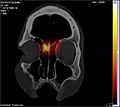 Effect of Long Nozzle


