Caffeic acid: Difference between revisions
CSV import |
CSV import Tags: mobile edit mobile web edit |
||
| Line 38: | Line 38: | ||
[[Category:Antioxidants]] | [[Category:Antioxidants]] | ||
[[Category:Plant physiology]] | [[Category:Plant physiology]] | ||
<gallery> | |||
File:Kaffeesäure.svg|Caffeic acid chemical structure | |||
File:Cafeic-acid-3D.png|Caffeic acid 3D model | |||
File:CaffeicAcid3d.png|Caffeic acid 3D representation | |||
File:CaffeicAcIn.png|Caffeic acid | |||
</gallery> | |||
Latest revision as of 05:04, 18 February 2025
An organic compound that is a hydroxycinnamic acid

Caffeic acid is an organic compound that is classified as a hydroxycinnamic acid. It is a naturally occurring phenolic compound found in a variety of plants and is known for its antioxidant properties. Caffeic acid is a key intermediate in the biosynthesis of lignin, a major component of plant cell walls.
Structure and Properties[edit]
Caffeic acid is a phenolic acid with the chemical formula C_H_O_. It consists of a benzene ring with two hydroxyl groups and a carboxylic acid group. The presence of these functional groups contributes to its antioxidant activity, allowing it to scavenge free radicals and reduce oxidative stress.
Occurrence[edit]
Caffeic acid is widely distributed in the plant kingdom. It is found in coffee, fruits, vegetables, and herbs. It is particularly abundant in coffee beans, where it contributes to the flavor and aroma of coffee. Other sources include apples, pears, berries, and olive oil.
Biological Role[edit]
In plants, caffeic acid plays a crucial role in the phenylpropanoid pathway, which is involved in the synthesis of lignin and other important compounds. It acts as a precursor to various polyphenols and is involved in plant defense mechanisms against pathogens and UV radiation.
Health Benefits[edit]
Caffeic acid is known for its potential health benefits due to its antioxidant properties. It may help reduce inflammation, protect against cancer, and support cardiovascular health. Studies suggest that it can inhibit the formation of carcinogenic compounds and protect cells from oxidative damage.
Applications[edit]
Caffeic acid is used in the food industry as a natural antioxidant to preserve the freshness and quality of food products. It is also used in cosmetics for its anti-aging and skin-protective properties. In pharmaceuticals, caffeic acid derivatives are being explored for their therapeutic potential.
Related Compounds[edit]
Caffeic acid is related to other hydroxycinnamic acids such as ferulic acid, p-coumaric acid, and sinapic acid. These compounds share similar structures and biological activities.
See Also[edit]
Related Pages[edit]
-
 Caffeic acid chemical structure
 -
 Caffeic acid 3D model
 -
 Caffeic acid 3D representation
 -
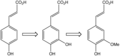 Caffeic acid


