S-15535: Difference between revisions
CSV import Tags: mobile edit mobile web edit |
CSV import |
||
| Line 24: | Line 24: | ||
[[Category:Experimental drugs]] | [[Category:Experimental drugs]] | ||
{{pharma-stub}} | {{pharma-stub}} | ||
<gallery> | |||
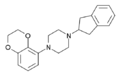
File:S-15535 structure.png|S-15535 | |||
</gallery> | |||
Latest revision as of 01:26, 20 February 2025
S-15535 is a synthetic compound that belongs to the class of indole derivatives. It is known for its potential therapeutic applications in the field of neuroscience and psychiatry, particularly in the treatment of depression and anxiety disorders.
Chemistry[edit]
S-15535 is an indole derivative, which means it is a compound that contains the indole functional group. This group consists of a benzene ring fused to a pyrrole ring. Indole derivatives are common in a wide variety of therapeutic agents, including many antidepressants and antipsychotics.
Pharmacology[edit]
The exact mechanism of action of S-15535 is not fully understood. However, it is known to act as a potent and selective serotonin 5-HT1A receptor agonist. This means it binds to and activates these receptors, which are found in various areas of the brain. Activation of 5-HT1A receptors has been linked to a variety of effects, including mood enhancement and anxiety reduction.
Clinical Applications[edit]
S-15535 has been studied for its potential use in the treatment of various psychiatric disorders. Its potent activity at 5-HT1A receptors suggests it may be useful in the treatment of conditions such as depression and anxiety disorders. However, more research is needed to fully understand its therapeutic potential and safety profile.
Research[edit]
Research into S-15535 is ongoing, with studies investigating its pharmacological properties, mechanism of action, and potential therapeutic applications. These studies are contributing to our understanding of the role of 5-HT1A receptors in mood regulation and the potential for indole derivatives like S-15535 to treat psychiatric disorders.
See Also[edit]

-
 S-15535

