Lipid: Difference between revisions
CSV import Tags: mobile edit mobile web edit |
CSV import Tags: mobile edit mobile web edit |
||
| Line 41: | Line 41: | ||
{{stub}} | {{stub}} | ||
<gallery> | |||
File:Common_lipid_types.svg|Common lipid types | |||
File:Prostacyclin-2D-skeletal.png|Prostacyclin 2D skeletal | |||
File:Leukotriene_B4.svg|Leukotriene B4 | |||
File:Fat_triglyceride_shorthand_formula.PNG|Fat triglyceride shorthand formula | |||
File:Phosphatidyl-ethanolamine.svg|Phosphatidyl ethanolamine | |||
File:Sphingomyelin-horizontal-2D-skeletal.png|Sphingomyelin horizontal 2D skeletal | |||
File:Cholesterol.svg|Cholesterol | |||
File:Geraniol_structure.png|Geraniol structure | |||
File:Kdo2-lipidA.png|Kdo2 lipid A | |||
File:Phospholipids_aqueous_solution_structures.svg|Phospholipids aqueous solution structures | |||
</gallery> | |||
Revision as of 12:08, 18 February 2025
Lipids are a group of naturally occurring molecules that include fats, waxes, sterols, fat-soluble vitamins (such as vitamins A, D, E, and K), monoglycerides, diglycerides, triglycerides, and phospholipids. The main biological functions of lipids include storing energy, signaling, and acting as structural components of cell membranes.
Structure and Function
Lipids are an extremely diverse group of molecules that share the common property of being insoluble in water. They are, however, soluble in other organic solvents. This property is due to the molecular structure of lipids, which is typically composed of a glycerol backbone bonded to long-chain fatty acids.
Lipids serve a variety of important functions in living organisms. They act as chemical messengers, serve as valuable energy sources, provide insulation, and make up the protective membranes that surround cells.
Classification
Lipids can be classified into eight categories: fatty acids, glycerolipids, glycerophospholipids, sphingolipids, sterols, presterols, saccharolipids, and polyketides.
Metabolism
The metabolism of lipids takes place in the mitochondria, where they are broken down to produce energy. This process is known as beta-oxidation. Lipids are also involved in the synthesis of certain vitamins and hormones.
Role in Disease
Abnormal lipid metabolism can lead to a variety of health problems, including cardiovascular disease, diabetes, and obesity. High levels of certain types of lipids in the blood can lead to the formation of atherosclerosis, a condition characterized by the buildup of fatty deposits in the arteries.
See Also
- Fatty acid metabolism
- Lipid bilayer
- Lipidomics
- Lipid profile
- Lipid raft
- Lipid signaling
- Lipid storage disorder
- Lipid theory of aging
References
<references />
 | |
|---|---|
 |
 |
-
 Common lipid types
 -
 Prostacyclin 2D skeletal
 -
 Leukotriene B4
 -
 Fat triglyceride shorthand formula
 -
 Phosphatidyl ethanolamine
 -
 Sphingomyelin horizontal 2D skeletal
 -
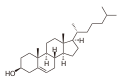 Cholesterol
 -
 Geraniol structure
 -
 Kdo2 lipid A
 -
 Phospholipids aqueous solution structures


