Tunneling nanotube: Difference between revisions
CSV import |
CSV import |
||
| Line 39: | Line 39: | ||
[[Category:Cell biology]] | [[Category:Cell biology]] | ||
[[Category:Intercellular communication]] | [[Category:Intercellular communication]] | ||
== Tunneling_nanotube == | |||
<gallery> | |||
File:Nanotubes.png|Tunneling_nanotube | |||
File:Tunelling_nanotube.png|Tunneling_nanotube | |||
File:Intercellular-communication-in-malignant-pleural-mesothelioma-properties-of-tunneling-nanotubes-Movie4.ogv|Tunneling_nanotube | |||
</gallery> | |||
Latest revision as of 04:13, 18 February 2025
Tunneling Nanotube[edit]

Tunneling nanotubes (TNTs) are thin, tubular structures that form direct connections between cells, allowing for the transfer of various cellular components and signals. These structures are a type of intercellular communication mechanism that can facilitate the exchange of organelles, proteins, and even nucleic acids between cells.
Discovery and Structure[edit]
Tunneling nanotubes were first described in 2004 by Rustom et al. They are characterized by their long, thin, and dynamic nature, typically ranging from 50 to 200 nanometers in diameter and extending up to several cell diameters in length. TNTs are composed of actin filaments, which provide structural support and facilitate the transport of materials.
Function[edit]
TNTs play a crucial role in various physiological and pathological processes. They are involved in the transfer of mitochondria, endoplasmic reticulum components, and lysosomes between cells. This transfer can influence cellular metabolism, survival, and response to stress. TNTs are also implicated in the spread of pathogens such as viruses and bacteria, as they can facilitate the direct cell-to-cell transmission of infectious agents.
Role in Disease[edit]
Tunneling nanotubes have been observed in several disease contexts, including cancer, neurodegenerative diseases, and infectious diseases. In cancer, TNTs can contribute to tumor progression by enabling the transfer of chemoresistance factors and oncogenes between cancer cells. In neurodegenerative diseases, such as Parkinson's disease and Alzheimer's disease, TNTs may facilitate the spread of toxic proteins like alpha-synuclein and beta-amyloid.
Research and Applications[edit]
Research on TNTs is ongoing, with scientists exploring their potential as targets for therapeutic intervention. By understanding the mechanisms that regulate TNT formation and function, it may be possible to develop strategies to inhibit their role in disease progression. Additionally, TNTs are being studied for their potential use in cell therapy and tissue engineering, where they could be harnessed to enhance cell communication and integration.
Related Pages[edit]
References[edit]
<references group="" responsive="1"></references>
External Links[edit]
Tunneling_nanotube[edit]
-
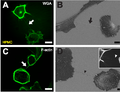 Tunneling_nanotube
 -
 Tunneling_nanotube
 -
 Tunneling_nanotube


