Fitness to dive: Difference between revisions
CSV import Tags: mobile edit mobile web edit |
CSV import Tags: mobile edit mobile web edit |
||
| Line 28: | Line 28: | ||
{{Diving-stub}} | {{Diving-stub}} | ||
{{Health-stub}} | {{Health-stub}} | ||
<gallery> | |||
File:PCBasedSpirometer.jpg|PC-based spirometer used for measuring lung function | |||
File:Handheld_spirometer.jpg|Handheld spirometer for portable lung function testing | |||
File:Lungvolumes.svg|Diagram of lung volumes and capacities | |||
File:Stress_test.jpg|Stress test equipment used for assessing cardiovascular fitness | |||
</gallery> | |||
Latest revision as of 04:58, 18 February 2025
Fitness to Dive is the physical and mental suitability of a diver to engage in underwater diving activities. Factors such as age, physical condition, and medical history can all impact a diver's fitness to dive.
Overview[edit]
Fitness to dive, also known as diving fitness or diving medical fitness, is a measure of a diver's physical and mental ability to safely participate in underwater diving activities. This includes both recreational and professional diving. The assessment of fitness to dive is typically conducted by a Diving Medical Practitioner who has been trained in the potential hazards associated with diving and the appropriate health standards for divers.
Physical Fitness[edit]
Physical fitness for diving involves a combination of cardiovascular fitness, strength, and flexibility. Cardiovascular fitness is important for divers as it helps to reduce the risk of Decompression Sickness, a potentially serious condition that can occur when a diver ascends too quickly. Strength and flexibility are also important as they can help a diver to manage the physical demands of diving, such as carrying heavy equipment and maneuvering in the water.
Mental Fitness[edit]
Mental fitness for diving is equally important. Divers must be able to remain calm under pressure, solve problems, and make decisions quickly. Mental health conditions such as anxiety or panic disorders may affect a diver's ability to stay calm and focused underwater.
Medical Fitness[edit]
Certain medical conditions can affect a diver's fitness to dive. These include respiratory conditions, cardiovascular conditions, and certain neurological conditions. A Diving Medical Practitioner will typically conduct a thorough medical examination to assess a diver's medical fitness to dive.
Age and Diving[edit]
While there is no set age limit for diving, age can affect a diver's fitness to dive. Older divers may have reduced physical fitness or may have medical conditions that make diving more risky. However, with appropriate training and medical clearance, many older individuals can safely participate in diving activities.
See Also[edit]

-
 PC-based spirometer used for measuring lung function
 -
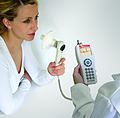 Handheld spirometer for portable lung function testing
 -
 Diagram of lung volumes and capacities
 -
 Stress test equipment used for assessing cardiovascular fitness


