Yeast in winemaking
The role of yeast in winemaking is crucial and multifaceted. Yeast is a microorganism that consumes sugar in the grape juice or must and converts it into alcohol and carbon dioxide through the process of fermentation. This process is what transforms grape juice into wine.
History[edit]
The use of yeast in winemaking is a practice that dates back to ancient times. The earliest evidence of winemaking, found in the Neolithic period, suggests that wild yeasts were used to ferment grape juice into wine. The understanding and control of yeast and fermentation processes have evolved significantly over the centuries, with the development of cultivated yeast strains and fermentation technologies.
Types of Yeast[edit]
There are many different types of yeast used in winemaking, but the most common is Saccharomyces cerevisiae. This yeast is favored for its predictability and ability to ferment in a wide range of conditions. Other types of yeast, such as Brettanomyces, can contribute unique flavors and aromas to wine but can also cause off-flavors if not properly managed.
Yeast and Fermentation[edit]
During fermentation, yeast consumes the sugars in the grape juice and produces alcohol, carbon dioxide, and heat. The yeast also produces compounds called esters and phenols, which contribute to the aroma and flavor of the wine. The type of yeast used, as well as the conditions of fermentation, can significantly influence the final characteristics of the wine.
Yeast and Wine Styles[edit]
Different yeast strains can produce different styles of wine. For example, certain strains of Saccharomyces cerevisiae are used to produce Champagne and other sparkling wines because they can withstand the high pressure of the secondary fermentation in the bottle. Other yeast strains are used to produce sweet wines, as they can ferment at higher sugar levels.
Challenges and Controversies[edit]
While yeast is essential to winemaking, it can also present challenges. Uncontrolled or spontaneous fermentation can lead to off-flavors or spoilage. There is also ongoing debate in the wine industry about the use of wild yeasts versus cultivated yeasts, with some winemakers preferring the unpredictability and unique flavors of wild yeasts, and others preferring the control and consistency of cultivated yeasts.
See Also[edit]


Yeast in winemaking[edit]
-
 Stefano Lubiana Pinot Noir ferment vintage 2010
 -
 Albert Edelfelt - Louis Pasteur - 1885
 -
 Ethanol to acetaldehyde
 -
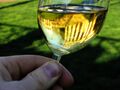 Chardonnay UVa
 -
 Catavino En Mano
 -
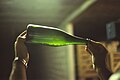 Undegorgierter Champagner
 -
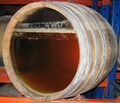 Vin jaune 13
 -
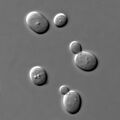 S cerevisiae under DIC microscopy


Medical Disclaimer: WikiMD is for informational purposes only and is not a substitute for professional medical advice. Content may be inaccurate or outdated and should not be used for diagnosis or treatment. Always consult your healthcare provider for medical decisions. Verify information with trusted sources such as CDC.gov and NIH.gov. By using this site, you agree that WikiMD is not liable for any outcomes related to its content. See full disclaimer.
Credits:Most images are courtesy of Wikimedia commons, and templates, categories Wikipedia, licensed under CC BY SA or similar.
Translate page: - East Asian
中文,
日本,
한국어,
South Asian
हिन्दी,
தமிழ்,
తెలుగు,
Urdu,
ಕನ್ನಡ,
Southeast Asian
Indonesian,
Vietnamese,
Thai,
မြန်မာဘာသာ,
বাংলা
European
español,
Deutsch,
français,
Greek,
português do Brasil,
polski,
română,
русский,
Nederlands,
norsk,
svenska,
suomi,
Italian
Middle Eastern & African
عربى,
Turkish,
Persian,
Hebrew,
Afrikaans,
isiZulu,
Kiswahili,
Other
Bulgarian,
Hungarian,
Czech,
Swedish,
മലയാളം,
मराठी,
ਪੰਜਾਬੀ,
ગુજરાતી,
Portuguese,
Ukrainian

