Wine and food pairing
Wine and Food Pairing is the process of matching the flavors and textures of wines with specific foods to enhance the dining experience. This practice is rooted in the traditions of many cultures and has evolved into a sophisticated aspect of gastronomy. Understanding the principles of wine and food pairing can elevate a simple meal to an exquisite culinary adventure.
Principles of Pairing[edit]
The main principles of wine and food pairing involve balance and harmony between the characteristics of the wine and the elements of the dish. These principles include matching the weight and intensity, contrasting flavors, and considering the acidity, sweetness, and tannins of the wine.
Matching Weight and Intensity[edit]
The weight or body of a wine should be complementary to the food's weight. A robust red wine pairs well with hearty dishes, while a light white wine is suited to lighter dishes. For example, a full-bodied Cabernet Sauvignon pairs well with a rich beef stew, while a delicate Sauvignon Blanc complements a light salad.
Contrasting Flavors[edit]
Contrasting flavors can enhance the dining experience by highlighting the unique characteristics of both the wine and the food. A classic example is the pairing of salty foods with sweet wines, such as Blue cheese with Sauternes.
Acidity, Sweetness, and Tannins[edit]
Wines with high acidity can complement fatty or rich foods by cutting through the richness. Sweet wines can balance dishes with a bit of spiciness, while wines with pronounced tannins pair well with protein-rich foods, as the proteins soften the tannins, making the wine feel smoother.
Types of Pairings[edit]
Wine and food pairings can be categorized into three types: congruent, complementary, and regional.
Congruent Pairings[edit]
Congruent pairings create harmony by amplifying shared flavor compounds. An example is pairing a buttery Chardonnay with a creamy lobster dish, where both share a rich, buttery character.
Complementary Pairings[edit]
Complementary pairings offer a contrast, bringing together wines and foods with opposing characteristics to create a balanced experience. A spicy Thai dish paired with a sweet Riesling is a good example, where the wine's sweetness cools the dish's heat.
Regional Pairings[edit]
Regional pairings are based on the principle that wines and foods that have evolved together geographically are naturally complementary. An example is Italian Chianti paired with a tomato-based pasta dish.
Pairing Guidelines[edit]
While there are no hard and fast rules for pairing wine and food, some general guidelines can help in making informed choices:
- Red wines typically pair well with bold flavored meats (e.g., beef, lamb). - White wines complement lighter meats (e.g., fish, chicken). - Consider the sauce and seasoning of the dish as much as the main ingredient. - Regional pairings can provide a simple guide to matching wines and foods.
Conclusion[edit]
Wine and food pairing is an art that enhances the enjoyment of both the wine and the meal. By understanding the basic principles and experimenting with different combinations, enthusiasts can discover pairings that elevate their culinary experiences.

-
 Vin Jaune
 -
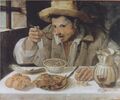 Der Bohnenesser by Carracci
 -
 Grüner Veltliner Weissenkirchen
 -
 Champagne
 -
 Beaujolais salad
 -
 Wine and cheese reception


Medical Disclaimer: WikiMD is for informational purposes only and is not a substitute for professional medical advice. Content may be inaccurate or outdated and should not be used for diagnosis or treatment. Always consult your healthcare provider for medical decisions. Verify information with trusted sources such as CDC.gov and NIH.gov. By using this site, you agree that WikiMD is not liable for any outcomes related to its content. See full disclaimer.
Credits:Most images are courtesy of Wikimedia commons, and templates, categories Wikipedia, licensed under CC BY SA or similar.
Translate page: - East Asian
中文,
日本,
한국어,
South Asian
हिन्दी,
தமிழ்,
తెలుగు,
Urdu,
ಕನ್ನಡ,
Southeast Asian
Indonesian,
Vietnamese,
Thai,
မြန်မာဘာသာ,
বাংলা
European
español,
Deutsch,
français,
Greek,
português do Brasil,
polski,
română,
русский,
Nederlands,
norsk,
svenska,
suomi,
Italian
Middle Eastern & African
عربى,
Turkish,
Persian,
Hebrew,
Afrikaans,
isiZulu,
Kiswahili,
Other
Bulgarian,
Hungarian,
Czech,
Swedish,
മലയാളം,
मराठी,
ਪੰਜਾਬੀ,
ગુજરાતી,
Portuguese,
Ukrainian

