Volvopluteus gloiocephalus
Volvopluteus gloiocephalus', commonly known as the big sheath mushroom, rose-gilled grisette, or the globose-headed volvopluteus, is a species of mushroom belonging to the family Pluteaceae. This mushroom is notable for its distinctive pink gills, which turn brown as the spores mature, and its large, white, sack-like volva that encases the base of the stalk. It is found in various parts of the world, growing solitarily or in groups in woodlands and on disturbed grounds, often on wood chips or in gardens.
Description[edit]
Volvopluteus gloiocephalus features a cap that can range from 5 to 15 cm in diameter, initially globose before expanding and flattening with age. The cap surface is smooth and white, sometimes with a slight pinkish or yellowish hue in wet conditions. The gills are free, crowded, and pink, becoming brownish with spore maturity. The stalk measures 6 to 12 cm in height and 1 to 2 cm in thickness, often bulging towards the base. A distinctive feature of this species is the large, white volva at the base of the stalk, which remains as a remnant of the mushroom's immature stage.
The spore print of Volvopluteus gloiocephalus is salmon or pink, a characteristic trait of mushrooms in the family Pluteaceae. Spores are smooth, ellipsoid, and measure approximately 7-10 by 4-6 micrometers.
Habitat and Distribution[edit]
Volvopluteus gloiocephalus is a cosmopolitan species, found in North America, Europe, Asia, and Australia. It typically grows in rich, disturbed soils, often associated with wood chips, mulch, or in garden settings. This mushroom is saprobic, feeding on dead organic matter, and is most commonly observed from late spring through to autumn.
Edibility[edit]
The edibility of Volvopluteus gloiocephalus is a subject of debate, with some sources suggesting that it is edible, while others advise against consumption due to the potential for confusion with toxic species. If considering for consumption, proper identification by an expert is strongly recommended.
Similar Species[edit]
Volvopluteus gloiocephalus can be confused with several other species, including those in the genus Amanita, some of which are highly toxic. Key distinguishing features include the pink to brown gills, the presence of a volva, and the habitat (often in disturbed, nutrient-rich soils rather than in undisturbed woodland).
Conservation[edit]
As a widespread and adaptable species, Volvopluteus gloiocephalus does not currently face any significant conservation threats. However, habitat destruction and pollution can impact local populations.
See Also[edit]
References[edit]
<references/> Species of fungus
Volvopluteus gloiocephalus | |
|---|---|
 | Gills on hymenium |
 | Cap is convex |
 | Hymenium is free |
 | Stipe has a volva |
 | Spore print is pink |
 | Ecology is saprotrophic |
 | Edibility is edible |

-
 Volvopluteus gloiocephalus in Southern California
 -
 Volvopluteus gloiocephalus
 -
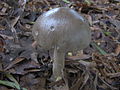 Volvopluteus gloiocephalus (DC.) Vizzini, Contu & Justo
 -
 Volvopluteus gloiocephalus
 -
 Pleurocystidia of Volvopluteus gloiocephalus
 -
 Cheilocystidia of Volvopluteus gloiocephalus


_Vizzini,_Contu_%26_Justo_138276.jpg)


Ad. Transform your health with W8MD Weight Loss, Sleep & MedSpa

Tired of being overweight?
Special offer:
Budget GLP-1 weight loss medications
- Semaglutide starting from $29.99/week and up with insurance for visit of $59.99 and up per week self pay.
- Tirzepatide starting from $45.00/week and up (dose dependent) or $69.99/week and up self pay
✔ Same-week appointments, evenings & weekends
Learn more:
- GLP-1 weight loss clinic NYC
- W8MD's NYC medical weight loss
- W8MD Philadelphia GLP-1 shots
- Philadelphia GLP-1 injections
- Affordable GLP-1 shots NYC
|
WikiMD Medical Encyclopedia |
Medical Disclaimer: WikiMD is for informational purposes only and is not a substitute for professional medical advice. Content may be inaccurate or outdated and should not be used for diagnosis or treatment. Always consult your healthcare provider for medical decisions. Verify information with trusted sources such as CDC.gov and NIH.gov. By using this site, you agree that WikiMD is not liable for any outcomes related to its content. See full disclaimer.
Credits:Most images are courtesy of Wikimedia commons, and templates, categories Wikipedia, licensed under CC BY SA or similar.
Translate this page: - East Asian
中文,
日本,
한국어,
South Asian
हिन्दी,
தமிழ்,
తెలుగు,
Urdu,
ಕನ್ನಡ,
Southeast Asian
Indonesian,
Vietnamese,
Thai,
မြန်မာဘာသာ,
বাংলা
European
español,
Deutsch,
français,
Greek,
português do Brasil,
polski,
română,
русский,
Nederlands,
norsk,
svenska,
suomi,
Italian
Middle Eastern & African
عربى,
Turkish,
Persian,
Hebrew,
Afrikaans,
isiZulu,
Kiswahili,
Other
Bulgarian,
Hungarian,
Czech,
Swedish,
മലയാളം,
मराठी,
ਪੰਜਾਬੀ,
ગુજરાતી,
Portuguese,
Ukrainian
