Vitamin K antagonist
Overview of Vitamin K antagonists
Overview[edit]
Vitamin K antagonists (VKAs) are a class of anticoagulant medications that work by inhibiting the action of vitamin K, which is essential for the synthesis of certain clotting factors. These medications are primarily used to prevent and treat thromboembolic disorders, such as deep vein thrombosis (DVT), pulmonary embolism (PE), and to prevent stroke in patients with atrial fibrillation.
Mechanism of Action[edit]
VKAs exert their anticoagulant effect by inhibiting the enzyme vitamin K epoxide reductase (VKOR). This enzyme is responsible for the conversion of vitamin K epoxide back to its active form, vitamin K hydroquinone. Active vitamin K is a cofactor for the gamma-carboxylation of glutamic acid residues on the N-terminal regions of vitamin K-dependent proteins, including clotting factors II, VII, IX, and X, as well as proteins C and S. By inhibiting VKOR, VKAs reduce the levels of these clotting factors, thereby prolonging the time it takes for blood to clot.
Common Vitamin K Antagonists[edit]
The most commonly used VKA is warfarin, which has been in clinical use for many decades. Other VKAs include acenocoumarol and phenprocoumon, which are used in certain countries. Warfarin is the most widely studied and used VKA globally.
Clinical Use[edit]
VKAs are used in various clinical settings:
- Prevention of Stroke in Atrial Fibrillation: Patients with non-valvular atrial fibrillation are at increased risk of stroke due to the formation of blood clots in the atria. VKAs reduce this risk by preventing clot formation.
- Treatment and Prevention of Venous Thromboembolism: VKAs are used to treat acute DVT and PE and to prevent their recurrence.
- Prosthetic Heart Valves: Patients with mechanical heart valves require anticoagulation to prevent thromboembolism, and VKAs are commonly used for this purpose.
Monitoring and Management[edit]
The anticoagulant effect of VKAs is monitored using the International Normalized Ratio (INR), which standardizes the prothrombin time (PT) test. The target INR range varies depending on the indication but is typically between 2.0 and 3.0 for most conditions. Regular monitoring is essential to ensure therapeutic efficacy and to minimize the risk of bleeding complications.
Dietary Considerations[edit]
Patients on VKAs need to maintain a consistent intake of vitamin K, as fluctuations can affect INR levels. Foods high in vitamin K, such as leafy green vegetables, should be consumed in consistent amounts.
Adverse Effects[edit]
The primary adverse effect of VKAs is bleeding, which can range from minor bruising to severe hemorrhage. Other side effects include skin necrosis and, rarely, "purple toe syndrome." Patients should be educated about the signs of bleeding and the importance of regular INR monitoring.
Reversal of Anticoagulation[edit]
In cases of excessive anticoagulation or bleeding, VKAs can be reversed by administering vitamin K, either orally or intravenously. In emergencies, prothrombin complex concentrates (PCCs) or fresh frozen plasma (FFP) may be used to rapidly restore clotting factor levels.
Alternatives to VKAs[edit]
In recent years, direct oral anticoagulants (DOACs) have become available as alternatives to VKAs. These include dabigatran, rivaroxaban, apixaban, and edoxaban. DOACs have the advantage of fixed dosing and do not require routine INR monitoring, but they are not suitable for all patients.
Related Pages[edit]
-
 Rattenvergifwaarschuwing
 -
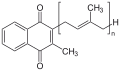 Menachinon
 -
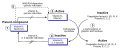 K1 vitamin Mechanism of Action
 -
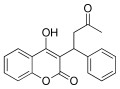 Warfarin
 -
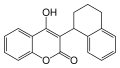 Coumatetralyl
 -
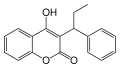 Phenprocoumon
 -
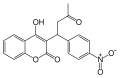 Acenocoumarol
 -
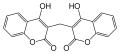 Dicumarol


Medical Disclaimer: WikiMD is for informational purposes only and is not a substitute for professional medical advice. Content may be inaccurate or outdated and should not be used for diagnosis or treatment. Always consult your healthcare provider for medical decisions. Verify information with trusted sources such as CDC.gov and NIH.gov. By using this site, you agree that WikiMD is not liable for any outcomes related to its content. See full disclaimer.
Credits:Most images are courtesy of Wikimedia commons, and templates, categories Wikipedia, licensed under CC BY SA or similar.
Translate page: - East Asian
中文,
日本,
한국어,
South Asian
हिन्दी,
தமிழ்,
తెలుగు,
Urdu,
ಕನ್ನಡ,
Southeast Asian
Indonesian,
Vietnamese,
Thai,
မြန်မာဘာသာ,
বাংলা
European
español,
Deutsch,
français,
Greek,
português do Brasil,
polski,
română,
русский,
Nederlands,
norsk,
svenska,
suomi,
Italian
Middle Eastern & African
عربى,
Turkish,
Persian,
Hebrew,
Afrikaans,
isiZulu,
Kiswahili,
Other
Bulgarian,
Hungarian,
Czech,
Swedish,
മലയാളം,
मराठी,
ਪੰਜਾਬੀ,
ગુજરાતી,
Portuguese,
Ukrainian

