Topical gels

A topical gel is a type of semisolid formulation that is applied to the skin or mucous membranes. These gels are used for delivering active ingredients directly to the site of action or for systemic absorption. They are composed of a three-dimensional network of polymer chains that are capable of retaining a significant amount of water or other solvents.
Composition[edit]
Topical gels typically consist of a gelling agent, a solvent, and an active ingredient. Common gelling agents include carbomer, xanthan gum, and guar gum.

The solvent is usually water or alcohol, which helps in the dissolution of the active ingredient and provides a cooling effect upon application. The active ingredient can vary widely depending on the intended use of the gel, ranging from analgesics and anti-inflammatory agents to antibiotics and antifungals.
Types of Topical Gels[edit]
Hydrogel[edit]

A hydrogel is a type of gel that contains a high percentage of water. Hydrogels are often used in wound care and burn treatment due to their ability to provide a moist environment that promotes healing.
Alcohol-Based Gels[edit]
Alcohol-based gels are commonly used for antiseptic purposes, such as hand sanitizers. These gels evaporate quickly, leaving the skin feeling refreshed and clean.
Oil-Based Gels[edit]
Oil-based gels are used for their emollient properties, providing a barrier that helps to retain moisture in the skin. They are often used in cosmetic and dermatological applications.
Applications[edit]
Topical gels are used in a variety of applications, including:
- Pain relief: Gels containing menthol or capsaicin are used for relieving muscle and joint pain.
- Allergy treatment: Gels with diphenhydramine are used to relieve itching and irritation from allergic reactions.
.jpg)
- Acne treatment: Gels containing benzoyl peroxide or salicylic acid are used to treat acne.
- Moisturization: Gels with hyaluronic acid are used to hydrate and plump the skin.
Mechanism of Action[edit]
Topical gels work by delivering the active ingredient directly to the site of action. The gel matrix allows for controlled release of the active ingredient, providing sustained effects over time. The viscosity of the gel can be adjusted to control the rate of release and absorption.
Advantages and Disadvantages[edit]
Advantages[edit]
- Easy to apply and spread over large areas.
- Non-greasy and quickly absorbed by the skin.
- Can provide localized treatment with minimal systemic side effects.
Disadvantages[edit]
- May cause skin irritation or allergic reactions in sensitive individuals.
- Some gels may leave a sticky residue on the skin.
Related Pages[edit]
References[edit]
- Topical_gels
-
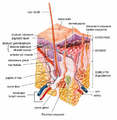 Skin
Skin -
 Sorbitol
 -
 SKLEER Natural Skin Restoration Gel
 -
 Salting In - Salting Out


Sponsored Health Resource

W8MD Weight Loss, Sleep & MedSpa
Looking for physician-supervised weight loss, semaglutide, tirzepatide, or GLP-1 receptor agonist options? W8MD helps eligible patients in New York City, Brooklyn, New Jersey, Connecticut, Pennsylvania, Delaware, and greater Philadelphia with medical weight loss, sleep medicine, and long-term maintenance support.
GLP-1 specials: Affordable GLP-1 injections NYC and Philadelphia starting from $29.99/week and up for semaglutide with insurance accepted for qualifying visits, and $45/week and up for tirzepatide with insurance accepted for qualifying visits. Self-pay options start from $59.99/week and up for semaglutide and $69.99/week and up for tirzepatide.
Medical weight loss NYC | Affordable GLP-1 injections NYC | Budget GLP-1 weight loss shots Philadelphia | New Jersey medical weight loss | NYC medical weight loss | Philadelphia medical weight loss | Sleep clinic NYC | W8MD's Philadelphia GLP-1 doctor | Weight loss prescriptions NYC
Book a W8MD appointment · View GLP-1 specials
Paid promotional message. Eligibility, pricing, insurance coverage, medication availability, and results vary. Medical evaluation required.

Medical Disclaimer: WikiMD is for informational purposes only and is not a substitute for professional medical advice. Content may be inaccurate or outdated and should not be used for diagnosis or treatment. Always consult your healthcare provider for medical decisions. Verify information with trusted sources such as CDC.gov and NIH.gov. By using this site, you agree that WikiMD is not liable for any outcomes related to its content. See full disclaimer.
Credits:Most images are courtesy of Wikimedia commons, and templates, categories Wikipedia, licensed under CC BY SA or similar.
Translate page: - East Asian
中文,
日本,
한국어,
South Asian
हिन्दी,
தமிழ்,
తెలుగు,
Urdu,
ಕನ್ನಡ,
Southeast Asian
Indonesian,
Vietnamese,
Thai,
မြန်မာဘာသာ,
বাংলা
European
español,
Deutsch,
français,
Greek,
português do Brasil,
polski,
română,
русский,
Nederlands,
norsk,
svenska,
suomi,
Italian
Middle Eastern & African
عربى,
Turkish,
Persian,
Hebrew,
Afrikaans,
isiZulu,
Kiswahili,
Other
Bulgarian,
Hungarian,
Czech,
Swedish,
മലയാളം,
मराठी,
ਪੰਜਾਬੀ,
ગુજરાતી,
Portuguese,
Ukrainian

