Tilidine
Tilidine is a synthetic opioid painkiller, used mainly in Germany, Switzerland, South Africa and Belgium for treatment of moderate to severe pain, both acute and chronic. Its effectiveness in treating pain has been compared to that of morphine, and it has been used off-label for the treatment of neuropathic pain. It is also used in some cases for the treatment of pulmonary edema. Tilidine is marketed under several brand names, such as Valoron and Valtran.
Etymology[edit]
The term "Tilidine" is derived from the German "Tilidin", which is the INN and generic name of the drug in Germany and other countries. The exact etymology of the word is not known.
Pharmacology[edit]
Tilidine is a prodrug, which means it is metabolized in the liver into its active form, nortilidine, by the enzyme CYP2C19. Nortilidine is about 20 times more potent than tilidine, and it is nortilidine that provides the analgesic effect. Tilidine itself has very little analgesic effect.
Tilidine works by binding to the mu-opioid receptor, which is the same receptor that drugs like morphine and heroin bind to. This binding causes a decrease in the perception of pain.
Side Effects[edit]
Like all opioids, tilidine has a number of side effects. The most common side effects are nausea, dizziness, and dry mouth. More serious side effects can include respiratory depression, which can be life-threatening.
Legal Status[edit]
In the United States, tilidine is a Schedule I controlled substance, which means it has a high potential for abuse and no accepted medical use. In Germany, it is a prescription medicine, and it is also controlled under the Betäubungsmittelgesetz (Narcotics Act).
See Also[edit]
References[edit]

This WikiMD article can only be edited by registered and verified editors. You can log in or register.
-
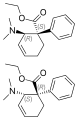 Chemical structure of Tilidine
 -
3D model of Tilidine
-
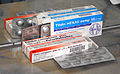 Tilidine retard tablets
 -
 Synthesis pathway of Tilidine


Sponsored Health Resource

W8MD Weight Loss, Sleep & MedSpa
Looking for physician-supervised weight loss, semaglutide, tirzepatide, or GLP-1 receptor agonist options? W8MD helps eligible patients in New York City, Brooklyn, New Jersey, Connecticut, Pennsylvania, Delaware, and greater Philadelphia with medical weight loss, sleep medicine, and long-term maintenance support.
GLP-1 specials: Affordable GLP-1 injections NYC and Philadelphia starting from $29.99/week and up for semaglutide with insurance accepted for qualifying visits, and $45/week and up for tirzepatide with insurance accepted for qualifying visits. Self-pay options start from $59.99/week and up for semaglutide and $69.99/week and up for tirzepatide.
- Medical weight loss NYC
- Affordable GLP-1 injections NYC
- Budget GLP-1 weight loss shots Philadelphia
- New Jersey medical weight loss
- NYC medical weight loss blog
- Philadelphia weight loss blog
- Sleep medicine and sleep apnea services
- W8MD MedSpa and wellness
Book a W8MD appointment · View GLP-1 specials
Paid promotional message. Eligibility, pricing, insurance coverage, medication availability, and results vary. Medical evaluation required.

Medical Disclaimer: WikiMD is for informational purposes only and is not a substitute for professional medical advice. Content may be inaccurate or outdated and should not be used for diagnosis or treatment. Always consult your healthcare provider for medical decisions. Verify information with trusted sources such as CDC.gov and NIH.gov. By using this site, you agree that WikiMD is not liable for any outcomes related to its content. See full disclaimer.
Credits:Most images are courtesy of Wikimedia commons, and templates, categories Wikipedia, licensed under CC BY SA or similar.
Translate page: - East Asian
中文,
日本,
한국어,
South Asian
हिन्दी,
தமிழ்,
తెలుగు,
Urdu,
ಕನ್ನಡ,
Southeast Asian
Indonesian,
Vietnamese,
Thai,
မြန်မာဘာသာ,
বাংলা
European
español,
Deutsch,
français,
Greek,
português do Brasil,
polski,
română,
русский,
Nederlands,
norsk,
svenska,
suomi,
Italian
Middle Eastern & African
عربى,
Turkish,
Persian,
Hebrew,
Afrikaans,
isiZulu,
Kiswahili,
Other
Bulgarian,
Hungarian,
Czech,
Swedish,
മലയാളം,
मराठी,
ਪੰਜਾਬੀ,
ગુજરાતી,
Portuguese,
Ukrainian


