Tanacetum balsamita
Tanacetum balsamita, also known as balsam herb, alecost, and mint geranium, is a perennial herbaceous plant in the Asteraceae family. It is native to Asia and Europe, but has been introduced to other parts of the world, including North America.
Description[edit]
Tanacetum balsamita is a robust plant that can reach a height of up to 1 meter. It has a strong, aromatic scent, similar to that of mint or camphor. The leaves are oblong, toothed, and have a grayish-green color. The flowers are small, yellow, and arranged in dense clusters.
Cultivation[edit]
Tanacetum balsamita is a hardy plant that can grow in a variety of soil types, but prefers well-drained soil and full sun. It is propagated by seeds, cuttings, or division. The plant is resistant to most pests and diseases, but can be affected by powdery mildew and aphids.
Uses[edit]
The leaves of Tanacetum balsamita are used in cooking for their balsamic flavor. They can be used fresh or dried, and are often used in salads, soups, and stews. The plant is also used in traditional medicine for its antiseptic, digestive, and anti-inflammatory properties. In addition, it is used in the production of perfumes and cosmetics due to its aromatic scent.
Taxonomy[edit]
The genus name Tanacetum comes from the Greek words 'athanasia', which means 'immortality', and 'balsamita', which refers to the balsamic scent of the plant. The species was first described by the Swedish botanist Carl Linnaeus in 1753.
See also[edit]
This medicinal plants related article is a stub. You can help WikiMD by expanding it.
Tanacetum_balsamita[edit]
-
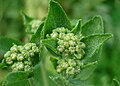 Tanacetum balsamita cv. majus
 -
 Tanacetum balsamita


Medical Disclaimer: WikiMD is for informational purposes only and is not a substitute for professional medical advice. Content may be inaccurate or outdated and should not be used for diagnosis or treatment. Always consult your healthcare provider for medical decisions. Verify information with trusted sources such as CDC.gov and NIH.gov. By using this site, you agree that WikiMD is not liable for any outcomes related to its content. See full disclaimer.
Credits:Most images are courtesy of Wikimedia commons, and templates, categories Wikipedia, licensed under CC BY SA or similar.
Translate page: - East Asian
中文,
日本,
한국어,
South Asian
हिन्दी,
தமிழ்,
తెలుగు,
Urdu,
ಕನ್ನಡ,
Southeast Asian
Indonesian,
Vietnamese,
Thai,
မြန်မာဘာသာ,
বাংলা
European
español,
Deutsch,
français,
Greek,
português do Brasil,
polski,
română,
русский,
Nederlands,
norsk,
svenska,
suomi,
Italian
Middle Eastern & African
عربى,
Turkish,
Persian,
Hebrew,
Afrikaans,
isiZulu,
Kiswahili,
Other
Bulgarian,
Hungarian,
Czech,
Swedish,
മലയാളം,
मराठी,
ਪੰਜਾਬੀ,
ગુજરાતી,
Portuguese,
Ukrainian

