Swedish cuisine
Overview of Swedish cuisine
Swedish cuisine is characterized by its simplicity and reliance on fresh, local ingredients. It reflects the country's geographical location, climate, and cultural history. Traditional Swedish dishes often feature fish, meat, potatoes, and dairy products.
History[edit]
Swedish cuisine has evolved over centuries, influenced by the country's agricultural practices and trade. Historically, the diet was based on what could be grown or hunted locally. The long winters and short growing seasons led to the development of preservation techniques such as pickling, smoking, and curing.
Ingredients[edit]
Swedish cuisine makes extensive use of local ingredients. Commonly used ingredients include:
- Fish: Particularly herring, salmon, and cod.
- Meat: Including pork, beef, and reindeer.
- Potatoes: A staple in many dishes.
- Dairy products: Such as milk, cream, and cheese.
- Berries: Like lingonberries and blueberries.
Traditional Dishes[edit]
Main Courses[edit]
- Köttbullar (Swedish meatballs): Made from a mixture of ground meat, usually beef or pork, seasoned with salt, pepper, and allspice, and served with lingonberry sauce and potatoes.
- Gravlax: Salmon cured with salt, sugar, and dill, often served with a mustard-dill sauce.
- Surströmming: Fermented Baltic herring, known for its strong odor, traditionally eaten with flatbread and potatoes.
Side Dishes[edit]
- Janssons frestelse: A creamy potato casserole with onions and pickled sprats.
- Raggmunk: Potato pancakes served with fried pork and lingonberries.
Desserts[edit]
- Prinsesstårta: A layered cake with sponge, pastry cream, and a dome of whipped cream, covered with green marzipan.
- Kanelbullar: Cinnamon rolls, a popular pastry enjoyed during "fika," the Swedish coffee break.
Beverages[edit]
Swedish beverages include:
- Coffee: An integral part of Swedish culture, often enjoyed during "fika."
- Aquavit: A distilled spirit flavored with herbs, often consumed during festive occasions.
- Julmust: A non-alcoholic beverage traditionally consumed during Christmas.
Cultural Significance[edit]
Food plays a central role in Swedish culture, with many traditions and celebrations centered around meals. The concept of "lagom"—meaning "just the right amount"—is reflected in the balanced and moderate approach to eating.
Gallery[edit]
-
IKEA Köttbullar
-
Kanelbulle in Stockholm
-
Swedish cuisine
-
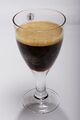 Glass of Swedish must
 -
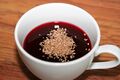 Blåbärssoppa
 -
Caloric punsch advertisement circa 1885


Related pages[edit]
| Swedish cuisine | ||||||||||
|---|---|---|---|---|---|---|---|---|---|---|
This Swedish cuisine related article is a stub.
|

Medical Disclaimer: WikiMD is for informational purposes only and is not a substitute for professional medical advice. Content may be inaccurate or outdated and should not be used for diagnosis or treatment. Always consult your healthcare provider for medical decisions. Verify information with trusted sources such as CDC.gov and NIH.gov. By using this site, you agree that WikiMD is not liable for any outcomes related to its content. See full disclaimer.
Credits:Most images are courtesy of Wikimedia commons, and templates, categories Wikipedia, licensed under CC BY SA or similar.
Translate page: - East Asian
中文,
日本,
한국어,
South Asian
हिन्दी,
தமிழ்,
తెలుగు,
Urdu,
ಕನ್ನಡ,
Southeast Asian
Indonesian,
Vietnamese,
Thai,
မြန်မာဘာသာ,
বাংলা
European
español,
Deutsch,
français,
Greek,
português do Brasil,
polski,
română,
русский,
Nederlands,
norsk,
svenska,
suomi,
Italian
Middle Eastern & African
عربى,
Turkish,
Persian,
Hebrew,
Afrikaans,
isiZulu,
Kiswahili,
Other
Bulgarian,
Hungarian,
Czech,
Swedish,
മലയാളം,
मराठी,
ਪੰਜਾਬੀ,
ગુજરાતી,
Portuguese,
Ukrainian


.jpg)


