Glögg
Glögg is a traditional Scandinavian beverage, often associated with the Christmas season. It is a type of mulled wine that is typically made with red wine, spices, and sometimes brandy or vodka. The drink is usually served warm, often with raisins and almonds added.
History[edit]
The origins of Glögg can be traced back to the Middle Ages, when it was known as "hippocras" and was believed to have medicinal properties. The modern version of Glögg, as we know it today, began to take shape in the 19th century in Sweden, where it became a popular Christmas tradition.
Preparation[edit]
The preparation of Glögg involves heating up red wine and adding a mixture of spices such as cinnamon, cardamom, ginger, cloves, and orange peel. Some versions also include brandy or vodka for an extra kick. The mixture is then allowed to simmer for a while before being strained and served warm. Raisins and almonds are often added to the drink just before serving.
Variations[edit]
There are many variations of Glögg across different Scandinavian countries. In Denmark and Norway, the drink is often made with aquavit or whiskey instead of wine. In Finland, a version of Glögg made with white wine or grape juice is popular. Non-alcoholic versions of Glögg are also common, especially for children and those who do not consume alcohol.
Cultural Significance[edit]
Glögg is deeply ingrained in Scandinavian Christmas traditions. It is often served during Advent celebrations, at Christmas markets, and at festive gatherings. The warm, spiced wine is thought to evoke the spirit of the holiday season and is often enjoyed in the company of friends and family.

 | This drink-related article is a stub. You can help WikiMD by expanding the page. |
-
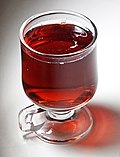 Glögg
Glögg -
 Glögg in a pot
 -
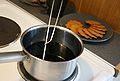 Glögg
Glögg


Medical Disclaimer: WikiMD is for informational purposes only and is not a substitute for professional medical advice. Content may be inaccurate or outdated and should not be used for diagnosis or treatment. Always consult your healthcare provider for medical decisions. Verify information with trusted sources such as CDC.gov and NIH.gov. By using this site, you agree that WikiMD is not liable for any outcomes related to its content. See full disclaimer.
Credits:Most images are courtesy of Wikimedia commons, and templates, categories Wikipedia, licensed under CC BY SA or similar.
Translate page: - East Asian
中文,
日本,
한국어,
South Asian
हिन्दी,
தமிழ்,
తెలుగు,
Urdu,
ಕನ್ನಡ,
Southeast Asian
Indonesian,
Vietnamese,
Thai,
မြန်မာဘာသာ,
বাংলা
European
español,
Deutsch,
français,
Greek,
português do Brasil,
polski,
română,
русский,
Nederlands,
norsk,
svenska,
suomi,
Italian
Middle Eastern & African
عربى,
Turkish,
Persian,
Hebrew,
Afrikaans,
isiZulu,
Kiswahili,
Other
Bulgarian,
Hungarian,
Czech,
Swedish,
മലയാളം,
मराठी,
ਪੰਜਾਬੀ,
ગુજરાતી,
Portuguese,
Ukrainian

