Stuffed mushrooms
Stuffed mushrooms are a popular appetizer and side dish in many different cuisines around the world. They consist of mushrooms that have been filled with a variety of ingredients and then baked or broiled.
History[edit]
The exact origins of stuffed mushrooms are unclear, but they have been a part of culinary traditions in many cultures for centuries. In Italy, for example, stuffed mushrooms are a common dish in the Italian tradition of antipasto. Similarly, in France, stuffed mushrooms, or champignons farcis, are a classic dish in French cuisine.
Preparation[edit]
The preparation of stuffed mushrooms involves several steps. First, the stems of the mushrooms are removed to create a cavity for the stuffing. The stems can be chopped and included in the stuffing, or discarded. The mushroom caps are then typically brushed with olive oil or melted butter and placed in a baking dish.
The stuffing for the mushrooms can vary widely, but often includes ingredients such as bread crumbs, cheese, garlic, onion, herbs, and spices. Some variations also include meat, such as sausage or bacon, or other vegetables. The stuffing is then spooned into the mushroom caps.
The stuffed mushrooms are then baked or broiled until the mushrooms are tender and the stuffing is golden brown. They can be served hot or at room temperature.
Variations[edit]
There are many variations of stuffed mushrooms, reflecting the diverse cuisines in which they are found. For example, in Italian cuisine, the stuffing often includes Parmesan cheese, garlic, and parsley. In French cuisine, the stuffing might include brie cheese, herbs de Provence, and garlic. In American cuisine, popular stuffing ingredients include cream cheese, bacon, and green onions.
See also[edit]
References[edit]

Stuffed_mushrooms[edit]
-
Raw stuffed mushrooms
-
Uncooked stuffed mushrooms
-
Stuffed mushrooms at a party
-
Stuffed mushrooms, Thanksgiving Day 2007
-
Stuffed mushrooms with spiced quinoa
-
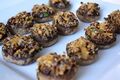 Sausage-stuffed mushrooms


Medical Disclaimer: WikiMD is for informational purposes only and is not a substitute for professional medical advice. Content may be inaccurate or outdated and should not be used for diagnosis or treatment. Always consult your healthcare provider for medical decisions. Verify information with trusted sources such as CDC.gov and NIH.gov. By using this site, you agree that WikiMD is not liable for any outcomes related to its content. See full disclaimer.
Credits:Most images are courtesy of Wikimedia commons, and templates, categories Wikipedia, licensed under CC BY SA or similar.
Translate page: - East Asian
中文,
日本,
한국어,
South Asian
हिन्दी,
தமிழ்,
తెలుగు,
Urdu,
ಕನ್ನಡ,
Southeast Asian
Indonesian,
Vietnamese,
Thai,
မြန်မာဘာသာ,
বাংলা
European
español,
Deutsch,
français,
Greek,
português do Brasil,
polski,
română,
русский,
Nederlands,
norsk,
svenska,
suomi,
Italian
Middle Eastern & African
عربى,
Turkish,
Persian,
Hebrew,
Afrikaans,
isiZulu,
Kiswahili,
Other
Bulgarian,
Hungarian,
Czech,
Swedish,
മലയാളം,
मराठी,
ਪੰਜਾਬੀ,
ગુજરાતી,
Portuguese,
Ukrainian


