Southern blot
Southern blot is a method used in molecular biology for detection of a specific DNA sequence in DNA samples. It was named after the British biologist Edwin Southern, who first published about the technique in 1975. The Southern blot method is used in research, clinical diagnostics, and forensic science.
Procedure[edit]
The Southern blot procedure begins with the DNA extraction from the sample. The DNA is then cut into smaller fragments using restriction enzymes. These fragments are separated by size through a process called gel electrophoresis. The separated DNA is then transferred to a membrane, a process known as blotting. The DNA fragments are then exposed to a probe - a DNA sequence with a label that can be either radioactive or fluorescent. The probe binds to the target DNA sequence and can be detected by the label.
Applications[edit]
Southern blot is used in various fields of biological research, including gene discovery, mapping, and cloning. It is also used in clinical diagnostics to detect mutations that cause genetic disorders and in forensic science to identify individuals or species.
Limitations[edit]
While Southern blot is a powerful tool, it has some limitations. It is time-consuming and requires a large amount of DNA. It also requires the knowledge of the sequence of interest to design the probe.
See also[edit]
References[edit]

This WikiMD article can only be edited by registered and verified editors. You can log in or register.
Southern_blot[edit]
-
 Southern blot process illustration
 -
 Setup of a Southern blot
 -
 Southern blot membrane
 -
 Agarose gel used in Southern blot
 -
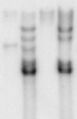 Autoradiogram of a Southern blot
.jpg)


Medical Disclaimer: WikiMD is for informational purposes only and is not a substitute for professional medical advice. Content may be inaccurate or outdated and should not be used for diagnosis or treatment. Always consult your healthcare provider for medical decisions. Verify information with trusted sources such as CDC.gov and NIH.gov. By using this site, you agree that WikiMD is not liable for any outcomes related to its content. See full disclaimer.
Credits:Most images are courtesy of Wikimedia commons, and templates, categories Wikipedia, licensed under CC BY SA or similar.
Translate page: - East Asian
中文,
日本,
한국어,
South Asian
हिन्दी,
தமிழ்,
తెలుగు,
Urdu,
ಕನ್ನಡ,
Southeast Asian
Indonesian,
Vietnamese,
Thai,
မြန်မာဘာသာ,
বাংলা
European
español,
Deutsch,
français,
Greek,
português do Brasil,
polski,
română,
русский,
Nederlands,
norsk,
svenska,
suomi,
Italian
Middle Eastern & African
عربى,
Turkish,
Persian,
Hebrew,
Afrikaans,
isiZulu,
Kiswahili,
Other
Bulgarian,
Hungarian,
Czech,
Swedish,
മലയാളം,
मराठी,
ਪੰਜਾਬੀ,
ગુજરાતી,
Portuguese,
Ukrainian

