Soused herring
Soused herring is a traditional dish of the Netherlands, Denmark, and Germany, made from raw herring that has been cured in a brine solution. The dish is also popular in other parts of Northern Europe, including Sweden and Finland.
History[edit]
The tradition of eating soused herring dates back to the Middle Ages, when it was a common method of preserving fish. The herring is typically caught in the North Sea or the Baltic Sea, and the curing process involves soaking the fish in a brine solution for several days to weeks. This process not only preserves the fish, but also gives it a distinctive, tangy flavor.
Preparation[edit]
To prepare soused herring, the fish are first gutted and cleaned, then soaked in a brine solution made from water, salt, and vinegar. The herring may also be flavored with other ingredients such as onion, bay leaves, and pepper. After the herring have been cured, they are typically served cold, often with bread, potatoes, or pickles.
Cultural Significance[edit]
In the Netherlands, the start of the herring season is marked by Vlaggetjesdag, a traditional festival that celebrates the arrival of the first young herring of the year. In Denmark, soused herring is often served as part of the traditional Christmas lunch, while in Germany, it is a common dish at Oktoberfest.
Health Benefits[edit]
Soused herring is not only a tasty dish, but also a healthy one. Herring is a good source of Omega-3 fatty acids, which are beneficial for heart health. It is also high in protein and low in fat, making it a good choice for a healthy diet.
See Also[edit]

-
Soused herring
-
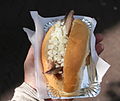 Soused herring
 -
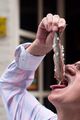 Soused herring
 -
Soused herring
-
Soused herring


Medical Disclaimer: WikiMD is for informational purposes only and is not a substitute for professional medical advice. Content may be inaccurate or outdated and should not be used for diagnosis or treatment. Always consult your healthcare provider for medical decisions. Verify information with trusted sources such as CDC.gov and NIH.gov. By using this site, you agree that WikiMD is not liable for any outcomes related to its content. See full disclaimer.
Credits:Most images are courtesy of Wikimedia commons, and templates, categories Wikipedia, licensed under CC BY SA or similar.
Translate page: - East Asian
中文,
日本,
한국어,
South Asian
हिन्दी,
தமிழ்,
తెలుగు,
Urdu,
ಕನ್ನಡ,
Southeast Asian
Indonesian,
Vietnamese,
Thai,
မြန်မာဘာသာ,
বাংলা
European
español,
Deutsch,
français,
Greek,
português do Brasil,
polski,
română,
русский,
Nederlands,
norsk,
svenska,
suomi,
Italian
Middle Eastern & African
عربى,
Turkish,
Persian,
Hebrew,
Afrikaans,
isiZulu,
Kiswahili,
Other
Bulgarian,
Hungarian,
Czech,
Swedish,
മലയാളം,
मराठी,
ਪੰਜਾਬੀ,
ગુજરાતી,
Portuguese,
Ukrainian


