Solanum nigrum
Solanum nigrum (also known as black nightshade, European black nightshade, or duscle) is a species of flowering plant in the family Solanaceae. It is native to Eurasia and introduced in the Americas, Australasia, and South Africa. Parts of this plant can be toxic to livestock and humans, and it is considered a weed.
Description[edit]
Solanum nigrum is an annual or sometimes biennial plant. It is erect, usually 30–120 cm high, and has a branching stem. The leaves are alternate, simple, ovate to heart-shaped, and have entire or wavy margins. The flowers are small with white petals and yellow stamens, and are grouped in loose, lateral clusters. The fruit is a round, smooth berry, black or purplish-black at maturity.
Distribution and habitat[edit]
Solanum nigrum is native to Eurasia and is widely naturalized in the Americas, Australasia, and South Africa. It grows in a variety of habitats, from open, disturbed areas to woodlands and riverbanks.
Uses[edit]
Despite its toxicity, Solanum nigrum has been used in traditional medicine for centuries. It has been used to treat a variety of conditions, including skin diseases, ulcers, fevers, and gout. However, the plant's safety and efficacy for these uses have not been clinically tested.
Toxicity[edit]
All parts of the plant can contain solanine, a toxic alkaloid. Symptoms of poisoning include dilated pupils, headache, confusion, and in severe cases, coma and death. However, the ripe berries are usually less toxic and are sometimes eaten, particularly in Eastern Europe.
Control[edit]
Control of Solanum nigrum is difficult due to its prolific seed production and its ability to regrow from root fragments. Methods of control include hand-pulling, mowing, and the use of herbicides.
See also[edit]

This flora-related article is a stub. You can help WikiMD by expanding it.
Solanum nigrum gallery[edit]
-
Solanum nigrum flower
-
Black Nightshade
-
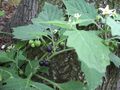 Solanum nigrum leaves, flowers, and fruits
 -
Makoi or Solanum nigrum berries
-
Solanum Nigrum Berries

Advertise on WikiMD — 81,000+ full articles, ~900,000 total pages, ~250 million page views. Global reach, limited time promotional rates from $1/page/day. Learn more · View stats

Translate page: - East Asian
中文,
日本,
한국어,
South Asian
हिन्दी,
தமிழ்,
తెలుగు,
Urdu,
ಕನ್ನಡ,
Southeast Asian
Indonesian,
Vietnamese,
Thai,
မြန်မာဘာသာ,
বাংলা
European
español,
Deutsch,
français,
Greek,
português do Brasil,
polski,
română,
русский,
Nederlands,
norsk,
svenska,
suomi,
Italian
Middle Eastern & African
عربى,
Turkish,
Persian,
Hebrew,
Afrikaans,
isiZulu,
Kiswahili,
Other
Bulgarian,
Hungarian,
Czech,
Swedish,
മലയാളം,
मराठी,
ਪੰਜਾਬੀ,
ગુજરાતી,
Portuguese,
Ukrainian
About WikiMD • Contact • Disclaimer • Privacy • Copyright • Site statistics
Some content and images may originate from Wikimedia Commons or Wikipedia and remain subject to their stated licenses. Unless otherwise noted, eligible WikiMD content is available under CC BY-SA 4.0.
WikiMD Wellnesspedia — Free health & wellness information for patients, students, and health professionals.


.jpg)

