Smoking cessation
Smoking cessation is the process of discontinuing tobacco smoking. Tobacco smoke contains nicotine, which is addictive and can cause dependence. Therefore, the process of quitting smoking can be long and challenging, although the health benefits are significant.
Health effects of smoking[edit]
Tobacco smoking is one of the leading causes of preventable death globally. It is a primary risk factor for many diseases, including lung cancer, heart disease, stroke, and chronic obstructive pulmonary disease (COPD). Smoking cessation significantly reduces these risks.
Methods of smoking cessation[edit]
There are various methods available to help individuals quit smoking. These include nicotine replacement therapy (NRT), prescription medication, behavioral therapy, and support groups.
Nicotine replacement therapy[edit]
Nicotine replacement therapy (NRT) involves the use of products that provide low doses of nicotine but do not contain the toxins found in smoke. The goal of therapy is to relieve cravings for nicotine and ease the symptoms of nicotine withdrawal.
Prescription medication[edit]
Certain prescription medications can help with smoking cessation. Two drugs, bupropion (Zyban) and varenicline (Chantix), are specifically approved for this use.
Behavioral therapy[edit]
Behavioral therapy involves working with a counselor to find ways not to smoke. This can include changing the behaviors that trigger the desire to smoke and learning new coping skills.
Support groups[edit]
Many people find that support groups, both in-person and online, can be helpful in the process of quitting smoking. These groups can provide practical advice and encouragement to people facing similar challenges.
Benefits of smoking cessation[edit]
The benefits of smoking cessation can be felt almost immediately and continue to increase the longer a person remains smoke-free. These benefits include improved lung function, lower risk of heart disease and cancer, increased life expectancy, and improved quality of life.
See also[edit]
 | This health-related article is a stub. You can help WikiMD by expanding the page. |
-
Comparison of a healthy lung and a smoker's lung
-
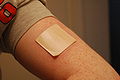 Nicoderm nicotine patch
 -
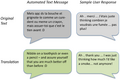 Text messaging used to provide encouragement to quit smoking
 -
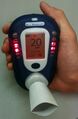 Breath CO monitor
 -
Smoking cessation
-
Smoking cessation strategies by West & Shiffman
-
Brain insula region related to smoking
-
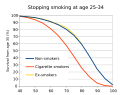 Results from the British doctors study on smoking
 -
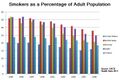 Smokers as a percentage of adult population


Medical Disclaimer: WikiMD is for informational purposes only and is not a substitute for professional medical advice. Content may be inaccurate or outdated and should not be used for diagnosis or treatment. Always consult your healthcare provider for medical decisions. Verify information with trusted sources such as CDC.gov and NIH.gov. By using this site, you agree that WikiMD is not liable for any outcomes related to its content. See full disclaimer.
Credits:Most images are courtesy of Wikimedia commons, and templates, categories Wikipedia, licensed under CC BY SA or similar.
Translate page: - East Asian
中文,
日本,
한국어,
South Asian
हिन्दी,
தமிழ்,
తెలుగు,
Urdu,
ಕನ್ನಡ,
Southeast Asian
Indonesian,
Vietnamese,
Thai,
မြန်မာဘာသာ,
বাংলা
European
español,
Deutsch,
français,
Greek,
português do Brasil,
polski,
română,
русский,
Nederlands,
norsk,
svenska,
suomi,
Italian
Middle Eastern & African
عربى,
Turkish,
Persian,
Hebrew,
Afrikaans,
isiZulu,
Kiswahili,
Other
Bulgarian,
Hungarian,
Czech,
Swedish,
മലയാളം,
मराठी,
ਪੰਜਾਬੀ,
ગુજરાતી,
Portuguese,
Ukrainian


