Sacral nerve stimulator
A Sacral Nerve Stimulator is a device used to manage urinary and bowel disorders by sending electrical impulses to the sacral nerves located in the lower back. These nerves control the muscles related to urinary and bowel functions.
Overview[edit]
The Sacral Nerve Stimulator, also known as a bladder pacemaker, is an implantable device that sends low-level electrical impulses to the sacral nerves. These impulses help control the muscles that manage urinary and bowel functions, thus helping to manage conditions such as urinary incontinence, urge incontinence, overactive bladder, and fecal incontinence.
Procedure[edit]
The procedure to implant a Sacral Nerve Stimulator involves two stages. The first stage, or the trial phase, involves placing a temporary wire near the sacral nerves. If the patient experiences significant symptom improvement during this phase, they proceed to the second stage, which involves implanting the permanent device.
Risks and Complications[edit]
As with any surgical procedure, there are potential risks and complications associated with the implantation of a Sacral Nerve Stimulator. These may include infection, bleeding, pain at the implant site, device malfunction, and undesirable changes in urinary or bowel function.
Effectiveness[edit]
The effectiveness of a Sacral Nerve Stimulator varies from person to person. Some people may experience significant symptom improvement, while others may notice only a slight change. Regular follow-up appointments with the healthcare provider are necessary to monitor the device and adjust settings as needed.
See Also[edit]

This WikiMD article can only be edited by registered and verified editors. You can log in or register.
-
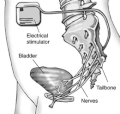 Sacral nerve stimulator


Medical Disclaimer: WikiMD is for informational purposes only and is not a substitute for professional medical advice. Content may be inaccurate or outdated and should not be used for diagnosis or treatment. Always consult your healthcare provider for medical decisions. Verify information with trusted sources such as CDC.gov and NIH.gov. By using this site, you agree that WikiMD is not liable for any outcomes related to its content. See full disclaimer.
Credits:Most images are courtesy of Wikimedia commons, and templates, categories Wikipedia, licensed under CC BY SA or similar.
Translate page: - East Asian
中文,
日本,
한국어,
South Asian
हिन्दी,
தமிழ்,
తెలుగు,
Urdu,
ಕನ್ನಡ,
Southeast Asian
Indonesian,
Vietnamese,
Thai,
မြန်မာဘာသာ,
বাংলা
European
español,
Deutsch,
français,
Greek,
português do Brasil,
polski,
română,
русский,
Nederlands,
norsk,
svenska,
suomi,
Italian
Middle Eastern & African
عربى,
Turkish,
Persian,
Hebrew,
Afrikaans,
isiZulu,
Kiswahili,
Other
Bulgarian,
Hungarian,
Czech,
Swedish,
മലയാളം,
मराठी,
ਪੰਜਾਬੀ,
ગુજરાતી,
Portuguese,
Ukrainian

