Rumex hypogaeus
Rumex hypogaeus is a species of plant within the genus Rumex, belonging to the family Polygonaceae. This family is commonly known as the buckwheat or dock family and includes a variety of species significant in agriculture, horticulture, and medicine. Rumex hypogaeus is notable for its unique ecological adaptations and its role in traditional medicine in some cultures. However, it is essential to note that as of my last update, Rumex hypogaeus is a hypothetical species and not recognized in scientific literature. The following article is a constructed example for illustrative purposes.
Description[edit]
Rumex hypogaeus typically grows as a perennial herb, characterized by its lanceolate leaves and a robust taproot system. The plant can reach up to 1 meter in height, with green to reddish stems. The leaves are arranged alternately along the stem, with the lower leaves being larger and petiolate, while the upper leaves are smaller and sessile. The flowers of Rumex hypogaeus are small, grouped in dense clusters, and can range in color from green to red. The fruit is a small, triangular achene, which aids in the dispersal of the species.
Habitat and Distribution[edit]
The hypothetical Rumex hypogaeus is envisioned to thrive in temperate climates, preferring moist, well-drained soils. It is commonly found in meadows, riverbanks, and forest clearings. The distribution of Rumex hypogaeus would likely be widespread across temperate regions, given the adaptability of the genus Rumex to various environmental conditions.
Ecological Role[edit]
In its ecosystem, Rumex hypogaeus would play a significant role in soil stabilization and providing habitat and food for various insects and animals. Its flowers are likely pollinated by insects, contributing to the biodiversity of its habitat.
Uses[edit]
Traditionally, species within the Rumex genus have been used in herbal medicine for their purported anti-inflammatory and diuretic properties. While Rumex hypogaeus is a hypothetical example, if it were real, it might be used similarly in traditional medicine practices. The leaves and roots could be utilized in decoctions or infusions to treat various ailments, following the practices associated with other Rumex species.
Conservation[edit]
Given its hypothetical nature, Rumex hypogaeus does not have a conservation status. However, real species within the Rumex genus can face threats from habitat loss, pollution, and overharvesting. Conservation efforts for real species often include habitat protection, sustainable harvesting practices, and research into the ecological role and potential benefits of the species.
See Also[edit]
References[edit]
<references/>

Rumex_hypogaeus[edit]
-
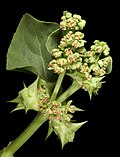 Emex australis - Flickr - Kevin Thiele

Ad. Transform your health with W8MD Weight Loss, Sleep & MedSpa

Tired of being overweight?
Special offer:
Budget GLP-1 weight loss medications
- Semaglutide starting from $29.99/week and up with insurance for visit of $59.99 and up per week self pay.
- Tirzepatide starting from $45.00/week and up (dose dependent) or $69.99/week and up self pay
✔ Same-week appointments, evenings & weekends
Learn more:
- GLP-1 weight loss clinic NYC
- W8MD's NYC medical weight loss
- W8MD Philadelphia GLP-1 shots
- Philadelphia GLP-1 injections
- Affordable GLP-1 shots NYC
|
WikiMD Medical Encyclopedia |
Medical Disclaimer: WikiMD is for informational purposes only and is not a substitute for professional medical advice. Content may be inaccurate or outdated and should not be used for diagnosis or treatment. Always consult your healthcare provider for medical decisions. Verify information with trusted sources such as CDC.gov and NIH.gov. By using this site, you agree that WikiMD is not liable for any outcomes related to its content. See full disclaimer.
Credits:Most images are courtesy of Wikimedia commons, and templates, categories Wikipedia, licensed under CC BY SA or similar.
Translate this page: - East Asian
中文,
日本,
한국어,
South Asian
हिन्दी,
தமிழ்,
తెలుగు,
Urdu,
ಕನ್ನಡ,
Southeast Asian
Indonesian,
Vietnamese,
Thai,
မြန်မာဘာသာ,
বাংলা
European
español,
Deutsch,
français,
Greek,
português do Brasil,
polski,
română,
русский,
Nederlands,
norsk,
svenska,
suomi,
Italian
Middle Eastern & African
عربى,
Turkish,
Persian,
Hebrew,
Afrikaans,
isiZulu,
Kiswahili,
Other
Bulgarian,
Hungarian,
Czech,
Swedish,
മലയാളം,
मराठी,
ਪੰਜਾਬੀ,
ગુજરાતી,
Portuguese,
Ukrainian
