Polygonaceae
The Polygonaceae, commonly known as the knotweed family or smartweed family, is a family of flowering plants. The family includes about 48 genera and approximately 1,200 species, which are mostly herbaceous plants, but also include shrubs, trees, and vines. Members of this family are found worldwide, but are most diverse in the Northern Hemisphere.
Description[edit]
Plants in the Polygonaceae family are characterized by their simple, alternate leaves and swollen nodes. The leaves are often accompanied by a membranous sheath called an ocrea, which is a distinctive feature of the family. The flowers are typically small and lack petals, but have colorful sepals that can be mistaken for petals. The fruit is usually a three-sided achene.
Notable Genera[edit]
- Polygonum - Known as knotweeds, this genus includes species such as Polygonum persicaria and Polygonum plebeium.
- Persicaria - Includes species like Persicaria maculosa and Persicaria capitata.
- Rheum - Includes rhubarb, which is cultivated for its edible leaf stalks.
- Fagopyrum - Includes buckwheat, an important crop for its seeds.
Ecology[edit]
Polygonaceae species are found in a variety of habitats, from wetlands to dry, rocky areas. They often play important roles in their ecosystems, providing food and habitat for various insects and animals. Some species, such as those in the genus Polygonum, are known for their ability to thrive in disturbed soils, making them common in urban and agricultural areas.
Uses[edit]
Several species within the Polygonaceae family are of economic importance. For example, Rheum rhabarbarum (rhubarb) is cultivated for its edible stalks, and Fagopyrum esculentum (buckwheat) is grown for its seeds, which are used as a grain. Additionally, some species are used in traditional medicine and as ornamental plants.
Gallery[edit]
-
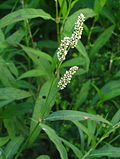 Polygonum persicaria
 -
 Polygonum plebeium
 -
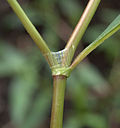 Ocreae of Persicaria maculosa
 -
 Persicaria capitata


Also see[edit]

Medical Disclaimer: WikiMD is for informational purposes only and is not a substitute for professional medical advice. Content may be inaccurate or outdated and should not be used for diagnosis or treatment. Always consult your healthcare provider for medical decisions. Verify information with trusted sources such as CDC.gov and NIH.gov. By using this site, you agree that WikiMD is not liable for any outcomes related to its content. See full disclaimer.
Credits:Most images are courtesy of Wikimedia commons, and templates, categories Wikipedia, licensed under CC BY SA or similar.
Translate page: - East Asian
中文,
日本,
한국어,
South Asian
हिन्दी,
தமிழ்,
తెలుగు,
Urdu,
ಕನ್ನಡ,
Southeast Asian
Indonesian,
Vietnamese,
Thai,
မြန်မာဘာသာ,
বাংলা
European
español,
Deutsch,
français,
Greek,
português do Brasil,
polski,
română,
русский,
Nederlands,
norsk,
svenska,
suomi,
Italian
Middle Eastern & African
عربى,
Turkish,
Persian,
Hebrew,
Afrikaans,
isiZulu,
Kiswahili,
Other
Bulgarian,
Hungarian,
Czech,
Swedish,
മലയാളം,
मराठी,
ਪੰਜਾਬੀ,
ગુજરાતી,
Portuguese,
Ukrainian

