Ropa vieja
Ropa Vieja is a traditional Cuban dish that has gained popularity in various parts of the world. The name translates to "old clothes" in English, which is a humorous reference to the shredded meat's resemblance to tattered clothing.
Ingredients[edit]
The main ingredient in Ropa Vieja is beef, specifically flank steak, which is slow-cooked until it can be easily shredded. Other key ingredients include bell peppers, onions, garlic, and tomatoes. The dish is typically seasoned with cumin, bay leaves, and oregano. Some variations may also include olives and capers for added flavor.
Preparation[edit]
The preparation of Ropa Vieja involves several steps. First, the beef is seared on both sides and then slow-cooked in a mixture of vegetables and spices until it becomes tender enough to shred. The shredded beef is then returned to the pot and simmered with the cooking liquid until it absorbs the flavors. The dish is typically served with white rice and black beans, making it a complete meal.
History[edit]
The origins of Ropa Vieja can be traced back to the Sephardic Jewish community in Spain. The dish was brought to Cuba by Spanish immigrants, where it evolved to incorporate local ingredients and cooking techniques. Today, Ropa Vieja is considered one of Cuba's national dishes and is enjoyed by people of all backgrounds.
Variations[edit]
While the Cuban version of Ropa Vieja is the most well-known, variations of the dish can be found in other Latin American countries. For example, in the Dominican Republic, Ropa Vieja is made with chicken instead of beef. In Panama, the dish is often served with coconut rice.
See Also[edit]
References[edit]
External Links[edit]
- [recipe-for-ropa-vieja Recipe for Ropa Vieja]
- [history-of-ropa-vieja History of Ropa Vieja]
-
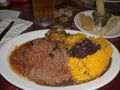 Ropa vieja


Medical Disclaimer: WikiMD is for informational purposes only and is not a substitute for professional medical advice. Content may be inaccurate or outdated and should not be used for diagnosis or treatment. Always consult your healthcare provider for medical decisions. Verify information with trusted sources such as CDC.gov and NIH.gov. By using this site, you agree that WikiMD is not liable for any outcomes related to its content. See full disclaimer.
Credits:Most images are courtesy of Wikimedia commons, and templates, categories Wikipedia, licensed under CC BY SA or similar.
Translate page: - East Asian
中文,
日本,
한국어,
South Asian
हिन्दी,
தமிழ்,
తెలుగు,
Urdu,
ಕನ್ನಡ,
Southeast Asian
Indonesian,
Vietnamese,
Thai,
မြန်မာဘာသာ,
বাংলা
European
español,
Deutsch,
français,
Greek,
português do Brasil,
polski,
română,
русский,
Nederlands,
norsk,
svenska,
suomi,
Italian
Middle Eastern & African
عربى,
Turkish,
Persian,
Hebrew,
Afrikaans,
isiZulu,
Kiswahili,
Other
Bulgarian,
Hungarian,
Czech,
Swedish,
മലയാളം,
मराठी,
ਪੰਜਾਬੀ,
ગુજરાતી,
Portuguese,
Ukrainian

