Religion and drugs
Religion and drugs refers to the use of psychoactive substances in religious contexts. This practice is found in various cultures throughout history and across the globe. The substances used can range from entheogens, which are psychoactive substances used in a religious or spiritual context, to more commonly known substances such as alcohol and cannabis.
History[edit]
The use of drugs in religious practices dates back to prehistoric times. Archaeological evidence suggests that the Neolithic people used entheogens, such as the Amanita muscaria mushroom, in religious ceremonies. In the Ancient Near East, the Sumerians and Babylonians used opium in their religious rituals.
Entheogens[edit]
Entheogens are substances, often of plant origin, that are used in religious, shamanic, or spiritual contexts. These substances are believed to induce spiritual experiences and insights. Examples of entheogens include peyote, psilocybin mushrooms, and ayahuasca.
Alcohol[edit]
Alcohol has been used in religious rituals and ceremonies for thousands of years. In Christianity, wine is used in the Eucharist, symbolizing the blood of Jesus Christ. In Judaism, wine is used in various rituals including the Kiddush and the Passover Seder.
Cannabis[edit]
Cannabis has been used in religious rituals in various cultures. In Hinduism, it is associated with the god Shiva and is used during the festival of Holi. In Rastafari, cannabis is considered a sacrament that cleans the body and mind, heals the soul, and brings the user closer to God.
Controversies[edit]
The use of drugs in religious contexts has been a subject of controversy and legal battles. In some countries, the use of certain substances is illegal, even in a religious context. This has led to debates about religious freedom and the separation of church and state.
See also[edit]
 | This religion-related article is a stub. You can help WikiMD by expanding the page. |
This pharmacology related article is a stub. You can help WikiMD by expanding it.
-
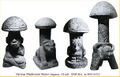 Psilocybe Mushrooms statues


Medical Disclaimer: WikiMD is for informational purposes only and is not a substitute for professional medical advice. Content may be inaccurate or outdated and should not be used for diagnosis or treatment. Always consult your healthcare provider for medical decisions. Verify information with trusted sources such as CDC.gov and NIH.gov. By using this site, you agree that WikiMD is not liable for any outcomes related to its content. See full disclaimer.
Credits:Most images are courtesy of Wikimedia commons, and templates, categories Wikipedia, licensed under CC BY SA or similar.
Translate page: - East Asian
中文,
日本,
한국어,
South Asian
हिन्दी,
தமிழ்,
తెలుగు,
Urdu,
ಕನ್ನಡ,
Southeast Asian
Indonesian,
Vietnamese,
Thai,
မြန်မာဘာသာ,
বাংলা
European
español,
Deutsch,
français,
Greek,
português do Brasil,
polski,
română,
русский,
Nederlands,
norsk,
svenska,
suomi,
Italian
Middle Eastern & African
عربى,
Turkish,
Persian,
Hebrew,
Afrikaans,
isiZulu,
Kiswahili,
Other
Bulgarian,
Hungarian,
Czech,
Swedish,
മലയാളം,
मराठी,
ਪੰਜਾਬੀ,
ગુજરાતી,
Portuguese,
Ukrainian

