Bcr-Abl tyrosine-kinase inhibitor
The Bcr-Abl tyrosine-kinase inhibitor is a type of pharmacological agent that specifically targets and inhibits the Bcr-Abl tyrosine kinase. This enzyme is a fusion protein, the product of the Philadelphia chromosome, a genetic abnormality found in 95% of people with chronic myelogenous leukemia (CML) and in some patients with acute lymphoblastic leukemia (ALL).
Mechanism of Action[edit]
The Bcr-Abl tyrosine-kinase inhibitor works by binding to the ATP-binding site of the Bcr-Abl enzyme, thereby preventing its phosphorylation and subsequent activation. This inhibition disrupts the proliferation and survival of leukemic cells, leading to their apoptosis, or programmed cell death.
Types of Bcr-Abl Tyrosine-Kinase Inhibitors[edit]
There are several types of Bcr-Abl tyrosine-kinase inhibitors, including Imatinib, Dasatinib, and Nilotinib. These drugs differ in their potency, selectivity, and side effect profiles.
Imatinib[edit]
Imatinib, also known as Gleevec, was the first Bcr-Abl tyrosine-kinase inhibitor to be approved by the Food and Drug Administration (FDA). It is used as a first-line treatment for CML and has dramatically improved the prognosis for patients with this disease.
Dasatinib[edit]
Dasatinib is a second-generation Bcr-Abl tyrosine-kinase inhibitor. It is more potent than imatinib and can overcome resistance to first-generation inhibitors.
Nilotinib[edit]
Nilotinib is another second-generation Bcr-Abl tyrosine-kinase inhibitor. It is similar to dasatinib in its potency and ability to overcome resistance, but it has a different side effect profile.
Side Effects[edit]
The side effects of Bcr-Abl tyrosine-kinase inhibitors can include nausea, vomiting, diarrhea, muscle pain, and fluid retention. More serious side effects can include liver toxicity, cardiovascular disease, and bone marrow suppression.
Resistance[edit]
Resistance to Bcr-Abl tyrosine-kinase inhibitors can occur due to mutations in the Bcr-Abl gene. This resistance can often be overcome with second-generation inhibitors.
See Also[edit]
- Tyrosine kinase
- Tyrosine kinase inhibitor
- Philadelphia chromosome
- Chronic myelogenous leukemia
- Acute lymphoblastic leukemia

-
 Imatinib development
 -
 Imatinib in its binding site
 -
 TKI resistance mechanism of action
 -
 Nilotinib in binding site
 -
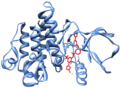 3CS9 Abl1 Nilotinib
 -
 Binding interactions of dasatinib in the active site of Abl kinase
 -
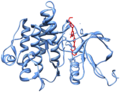 2GQG Abl1 Kinase Dasatinib
 -
 Bosutinib


Advertise on WikiMD — 81,000+ full articles, ~900,000 total pages, ~250 million page views. Global reach, limited time promotional rates from $1/page/day. Learn more · View stats


Translate page: - East Asian
中文,
日本,
한국어,
South Asian
हिन्दी,
தமிழ்,
తెలుగు,
Urdu,
ಕನ್ನಡ,
Southeast Asian
Indonesian,
Vietnamese,
Thai,
မြန်မာဘာသာ,
বাংলা
European
español,
Deutsch,
français,
Greek,
português do Brasil,
polski,
română,
русский,
Nederlands,
norsk,
svenska,
suomi,
Italian
Middle Eastern & African
عربى,
Turkish,
Persian,
Hebrew,
Afrikaans,
isiZulu,
Kiswahili,
Other
Bulgarian,
Hungarian,
Czech,
Swedish,
മലയാളം,
मराठी,
ਪੰਜਾਬੀ,
ગુજરાતી,
Portuguese,
Ukrainian
About WikiMD • Contact • Disclaimer • Privacy • Copyright • Site statistics
Some content and images may originate from Wikimedia Commons or Wikipedia and remain subject to their stated licenses. Unless otherwise noted, eligible WikiMD content is available under CC BY-SA 4.0.
WikiMD Wellnesspedia — Free health & wellness information for patients, students, and health professionals.

