Puchero
Puchero is a type of stew originating from Spain, specifically from the Andalusia region. It is a common dish in various Hispanic cultures and has been adapted into local cuisines in many countries, including the Philippines, Argentina, Uruguay, and Paraguay. The name "Puchero" is derived from the Spanish word "puchero" which means "pot" or "stewpot".
History[edit]
The origins of Puchero can be traced back to the Middle Ages in Spain. It was a staple food for peasants, who would combine whatever ingredients they had on hand into a pot and let it simmer for hours. Over time, the dish evolved and became popular in other regions of Spain and eventually spread to other countries through Spanish colonization.
Ingredients and Preparation[edit]
The ingredients of Puchero vary widely depending on the region. However, the basic components include meat, vegetables, and legumes. In Spain, it is typically made with beef or chicken, chickpeas, potatoes, and a variety of vegetables such as carrots, leeks, and cabbage. In the Philippines, Puchero is often made with pork or beef, bananas, potatoes, and tomato sauce.
The preparation of Puchero also varies by region. In general, the meat is first browned in a pot. Then, the vegetables and legumes are added, along with water or broth. The stew is then simmered until all the ingredients are tender. In some regions, rice or noodles may be added towards the end of cooking.
Variations[edit]
There are many regional variations of Puchero. In Argentina and Uruguay, for example, it is often made with corn and served with a side of chimichurri. In the Philippines, it is sweetened with ripe plantains and served with a side of rice.
Cultural Significance[edit]
Puchero is more than just a dish; it is a symbol of cultural identity and history. It represents the fusion of different cultures and the adaptation of a traditional dish to local tastes and ingredients. In many Hispanic cultures, Puchero is often served on special occasions or family gatherings, symbolizing unity and shared heritage.

-
 Puchero
 -
 Puchero argentino servido
 -
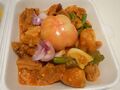 Puchero
 -
 Puchero, Uruguay


Medical Disclaimer: WikiMD is for informational purposes only and is not a substitute for professional medical advice. Content may be inaccurate or outdated and should not be used for diagnosis or treatment. Always consult your healthcare provider for medical decisions. Verify information with trusted sources such as CDC.gov and NIH.gov. By using this site, you agree that WikiMD is not liable for any outcomes related to its content. See full disclaimer.
Credits:Most images are courtesy of Wikimedia commons, and templates, categories Wikipedia, licensed under CC BY SA or similar.
Translate page: - East Asian
中文,
日本,
한국어,
South Asian
हिन्दी,
தமிழ்,
తెలుగు,
Urdu,
ಕನ್ನಡ,
Southeast Asian
Indonesian,
Vietnamese,
Thai,
မြန်မာဘာသာ,
বাংলা
European
español,
Deutsch,
français,
Greek,
português do Brasil,
polski,
română,
русский,
Nederlands,
norsk,
svenska,
suomi,
Italian
Middle Eastern & African
عربى,
Turkish,
Persian,
Hebrew,
Afrikaans,
isiZulu,
Kiswahili,
Other
Bulgarian,
Hungarian,
Czech,
Swedish,
മലയാളം,
मराठी,
ਪੰਜਾਬੀ,
ગુજરાતી,
Portuguese,
Ukrainian

