Poikiloderma
| Poikiloderma | |
|---|---|
| Synonyms | |
| Pronounce | N/A |
| Specialty | N/A |
| Symptoms | Skin atrophy, telangiectasia, hyperpigmentation, hypopigmentation |
| Complications | |
| Onset | |
| Duration | |
| Types | N/A |
| Causes | Genetic disorders, environmental factors |
| Risks | |
| Diagnosis | Clinical examination, biopsy |
| Differential diagnosis | Lupus erythematosus, scleroderma |
| Prevention | N/A |
| Treatment | Sun protection, topical treatments |
| Medication | |
| Prognosis | |
| Frequency | |
| Deaths | N/A |
Poikiloderma is a condition characterized by changes in the skin, including atrophy, telangiectasia, and variations in pigmentation such as hyperpigmentation and hypopigmentation. It is often a result of genetic disorders or environmental factors.
Signs and Symptoms[edit]
Poikiloderma presents with a combination of skin changes:
- Skin atrophy - thinning of the skin
- Telangiectasia - visible small blood vessels
- Hyperpigmentation - darkening of the skin
- Hypopigmentation - lightening of the skin
Causes[edit]
The causes of poikiloderma can be varied and include:
- Genetic disorders such as Rothmund-Thomson syndrome, Bloom syndrome, and Dyskeratosis congenita.
- Environmental factors like chronic sun exposure, which can lead to actinic damage.
Diagnosis[edit]
Diagnosis of poikiloderma is primarily clinical, based on the appearance of the skin. A biopsy may be performed to rule out other conditions and confirm the diagnosis.
Differential Diagnosis[edit]
Conditions that may present similarly to poikiloderma include:
Treatment[edit]
Management of poikiloderma focuses on:
- Sun protection to prevent further damage
- Topical treatments such as retinoids or steroids to improve skin appearance
See Also[edit]
References[edit]
External Links[edit]
- [Poikiloderma at DermNet NZ](https://dermnetnz.org/topics/poikiloderma/)
-
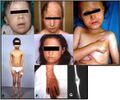 Rothmund-Thomson syndrome


Medical Disclaimer: WikiMD is for informational purposes only and is not a substitute for professional medical advice. Content may be inaccurate or outdated and should not be used for diagnosis or treatment. Always consult your healthcare provider for medical decisions. Verify information with trusted sources such as CDC.gov and NIH.gov. By using this site, you agree that WikiMD is not liable for any outcomes related to its content. See full disclaimer.
Credits:Most images are courtesy of Wikimedia commons, and templates, categories Wikipedia, licensed under CC BY SA or similar.
Translate page: - East Asian
中文,
日本,
한국어,
South Asian
हिन्दी,
தமிழ்,
తెలుగు,
Urdu,
ಕನ್ನಡ,
Southeast Asian
Indonesian,
Vietnamese,
Thai,
မြန်မာဘာသာ,
বাংলা
European
español,
Deutsch,
français,
Greek,
português do Brasil,
polski,
română,
русский,
Nederlands,
norsk,
svenska,
suomi,
Italian
Middle Eastern & African
عربى,
Turkish,
Persian,
Hebrew,
Afrikaans,
isiZulu,
Kiswahili,
Other
Bulgarian,
Hungarian,
Czech,
Swedish,
മലയാളം,
मराठी,
ਪੰਜਾਬੀ,
ગુજરાતી,
Portuguese,
Ukrainian

