Plum cake
A type of cake made with dried fruits and spices
Plum cake is a type of cake made with dried fruits and spices, and often soaked in spirits. It is a traditional cake in many countries and is especially popular during the Christmas season. Despite its name, plum cake does not necessarily contain plums; the term "plum" in the name refers to the pre-Victorian use of the word to denote raisins or other dried fruits.
History[edit]
The origins of plum cake can be traced back to the early Middle Ages when dried fruits and spices were first introduced to Europe from the Middle East. These ingredients were expensive and considered a luxury, often reserved for special occasions. Over time, the recipe evolved, and by the 18th century, plum cake had become a popular dessert in England.
Ingredients[edit]
Plum cake recipes vary widely, but they typically include a mixture of dried fruits such as raisins, currants, sultanas, and prunes. The cake is often flavored with spices like cinnamon, nutmeg, and cloves. Many recipes also call for the fruits to be soaked in brandy or rum for several days before baking, which enhances the flavor and preserves the cake.
Common Ingredients[edit]
- Dried fruits (raisins, currants, sultanas, prunes)
- Spices (cinnamon, nutmeg, cloves)
- Alcohol (brandy, rum)
- Butter
- Sugar
- Flour
- Eggs
- Baking powder
Preparation[edit]
The preparation of plum cake involves several steps. First, the dried fruits are soaked in alcohol for a few days to enhance their flavor. The butter and sugar are creamed together until light and fluffy, and then eggs are added one at a time. The flour and baking powder are sifted together and folded into the mixture. Finally, the soaked fruits and spices are added, and the batter is poured into a prepared cake tin.
The cake is typically baked at a low temperature for a long period to ensure even cooking. Once baked, it is often wrapped in parchment paper and stored in an airtight container to mature for several weeks, allowing the flavors to develop further.
Variations[edit]
Plum cake has many regional variations. In Germany, it is known as Pflaumenkuchen and is made with fresh plums. In India, plum cake is a popular Christmas treat, often made with cashews and almonds in addition to dried fruits. In the Caribbean, black cake is a type of plum cake that is darkened with burnt sugar and heavily spiced.
Cultural Significance[edit]
Plum cake is traditionally associated with Christmas and is often served during the holiday season. In many cultures, it is customary to bake the cake weeks in advance and allow it to mature, enhancing its rich flavors. It is also a popular choice for weddings and other celebrations.
Related pages[edit]
-
 Plum cake 08 ies
 -
 Baskidische Pflaumenkuchen
 -
 World's Best Fruitcake Katya Creates photo D Ramey Logan
 -
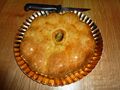 Pâté aux prunes
 -
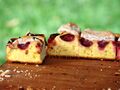 Pflaumenkuchen Sanok 2011
 -
 Zwetschkenkuchen Gaislachalm Sölden
 -
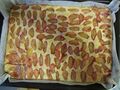 Plun pie Luumupiirakka IMG 3757 C
 -
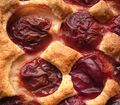 Plum cake 04 ies


Sponsored Health Resource

W8MD Weight Loss, Sleep & MedSpa
Looking for physician-supervised weight loss, semaglutide, tirzepatide, or GLP-1 receptor agonist options? W8MD helps eligible patients in New York City, Brooklyn, New Jersey, Connecticut, Pennsylvania, Delaware, and greater Philadelphia with medical weight loss, sleep medicine, and long-term maintenance support.
GLP-1 specials: Affordable GLP-1 injections NYC and Philadelphia starting from $29.99/week and up for semaglutide with insurance accepted for qualifying visits, and $45/week and up for tirzepatide with insurance accepted for qualifying visits. Self-pay options start from $59.99/week and up for semaglutide and $69.99/week and up for tirzepatide.
Medical weight loss NYC | Affordable GLP-1 injections NYC | Budget GLP-1 weight loss shots Philadelphia | New Jersey medical weight loss | NYC medical weight loss | Philadelphia medical weight loss | Sleep clinic NYC | W8MD's Philadelphia GLP-1 doctor | Weight loss prescriptions NYC
Book a W8MD appointment · View GLP-1 specials
Paid promotional message. Eligibility, pricing, insurance coverage, medication availability, and results vary. Medical evaluation required.

Medical Disclaimer: WikiMD is for informational purposes only and is not a substitute for professional medical advice. Content may be inaccurate or outdated and should not be used for diagnosis or treatment. Always consult your healthcare provider for medical decisions. Verify information with trusted sources such as CDC.gov and NIH.gov. By using this site, you agree that WikiMD is not liable for any outcomes related to its content. See full disclaimer.
Credits:Most images are courtesy of Wikimedia commons, and templates, categories Wikipedia, licensed under CC BY SA or similar.
Translate page: - East Asian
中文,
日本,
한국어,
South Asian
हिन्दी,
தமிழ்,
తెలుగు,
Urdu,
ಕನ್ನಡ,
Southeast Asian
Indonesian,
Vietnamese,
Thai,
မြန်မာဘာသာ,
বাংলা
European
español,
Deutsch,
français,
Greek,
português do Brasil,
polski,
română,
русский,
Nederlands,
norsk,
svenska,
suomi,
Italian
Middle Eastern & African
عربى,
Turkish,
Persian,
Hebrew,
Afrikaans,
isiZulu,
Kiswahili,
Other
Bulgarian,
Hungarian,
Czech,
Swedish,
മലയാളം,
मराठी,
ਪੰਜਾਬੀ,
ગુજરાતી,
Portuguese,
Ukrainian

