Phenylpiracetam
Phenylpiracetam (IUPAC name: (R,S)-2-(2-oxo-4-phenylpyrrolidin-1-yl)acetamide) is a nootropic drug of the racetam family. It is a derivative of piracetam with an added phenyl group, which is believed to increase the drug's potency.
History[edit]
Phenylpiracetam was developed in Russia in the 1980s as a cognitive enhancer. It was used by Russian cosmonauts during long space missions to combat fatigue and improve cognition.
Pharmacology[edit]
Phenylpiracetam is believed to act on the central nervous system (CNS) by increasing the release of dopamine, norepinephrine, and serotonin, neurotransmitters that play key roles in mood regulation, alertness, and cognition. It also increases the density of dopamine receptors in the brain, which may contribute to its cognitive-enhancing effects.
Clinical uses[edit]
Phenylpiracetam is used clinically in some countries, including Russia and Ukraine, for the treatment of cognitive impairment, stroke, and cerebral ischemia. It is also used off-label as a cognitive enhancer and to improve physical stamina.
Side effects[edit]
Common side effects of phenylpiracetam include insomnia, irritability, nausea, and headache. Rare but serious side effects include hypertension, tachycardia, and psychosis.
Legal status[edit]
In the United States, phenylpiracetam is not approved by the Food and Drug Administration (FDA) and is sold as a dietary supplement. In Russia and Ukraine, it is a prescription drug.
See also[edit]

 This nootropics-related article is a stub. You can help WikiMD by expanding it.
Phenylpiracetam[edit]
-
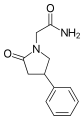 Chemical structure of Phenylpiracetam
 -
 Phenylpiracetam molecule
 -
 Phenotropil packaging


Medical Disclaimer: WikiMD is for informational purposes only and is not a substitute for professional medical advice. Content may be inaccurate or outdated and should not be used for diagnosis or treatment. Always consult your healthcare provider for medical decisions. Verify information with trusted sources such as CDC.gov and NIH.gov. By using this site, you agree that WikiMD is not liable for any outcomes related to its content. See full disclaimer.
Credits:Most images are courtesy of Wikimedia commons, and templates, categories Wikipedia, licensed under CC BY SA or similar.
Translate page: - East Asian
中文,
日本,
한국어,
South Asian
हिन्दी,
தமிழ்,
తెలుగు,
Urdu,
ಕನ್ನಡ,
Southeast Asian
Indonesian,
Vietnamese,
Thai,
မြန်မာဘာသာ,
বাংলা
European
español,
Deutsch,
français,
Greek,
português do Brasil,
polski,
română,
русский,
Nederlands,
norsk,
svenska,
suomi,
Italian
Middle Eastern & African
عربى,
Turkish,
Persian,
Hebrew,
Afrikaans,
isiZulu,
Kiswahili,
Other
Bulgarian,
Hungarian,
Czech,
Swedish,
മലയാളം,
मराठी,
ਪੰਜਾਬੀ,
ગુજરાતી,
Portuguese,
Ukrainian

