Perineal membrane
The Perineal Membrane is a thin, fibrous sheet of anatomical structure found in the pelvis. It is part of the perineum, the region between the pubic symphysis and the coccyx. The Perineal Membrane plays a crucial role in supporting the pelvic organs.
Etymology[edit]
The term "Perineal" is derived from the Greek word "Perinaion," which refers to the area around the anus. The term "Membrane" comes from the Latin word "Membrana," which means a thin layer or sheet.
Structure[edit]
The Perineal Membrane is a thin, triangular-shaped structure. It is attached to the inferior rami of the pubis and ischium and to the posterior border of the urogenital diaphragm. The membrane is pierced by the urethra in males and by the urethra and vagina in females.
Function[edit]
The primary function of the Perineal Membrane is to provide support to the pelvic organs. It also serves as a point of attachment for several muscles, including the bulbospongiosus, ischiocavernosus, and superficial transverse perineal muscles.
Clinical Significance[edit]
Damage to the Perineal Membrane can occur during childbirth or due to trauma, which can lead to pelvic organ prolapse. Surgical procedures involving the Perineal Membrane include perineoplasty and perineorrhaphy.
See Also[edit]
References[edit]

This WikiMD article can only be edited by registered and verified editors. You can log in or register.
-
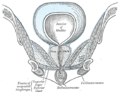 Perineal membrane
 -
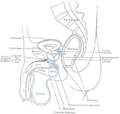 Perineal membrane
 -
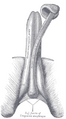 Perineal membrane


Medical Disclaimer: WikiMD is for informational purposes only and is not a substitute for professional medical advice. Content may be inaccurate or outdated and should not be used for diagnosis or treatment. Always consult your healthcare provider for medical decisions. Verify information with trusted sources such as CDC.gov and NIH.gov. By using this site, you agree that WikiMD is not liable for any outcomes related to its content. See full disclaimer.
Credits:Most images are courtesy of Wikimedia commons, and templates, categories Wikipedia, licensed under CC BY SA or similar.
Translate page: - East Asian
中文,
日本,
한국어,
South Asian
हिन्दी,
தமிழ்,
తెలుగు,
Urdu,
ಕನ್ನಡ,
Southeast Asian
Indonesian,
Vietnamese,
Thai,
မြန်မာဘာသာ,
বাংলা
European
español,
Deutsch,
français,
Greek,
português do Brasil,
polski,
română,
русский,
Nederlands,
norsk,
svenska,
suomi,
Italian
Middle Eastern & African
عربى,
Turkish,
Persian,
Hebrew,
Afrikaans,
isiZulu,
Kiswahili,
Other
Bulgarian,
Hungarian,
Czech,
Swedish,
മലയാളം,
मराठी,
ਪੰਜਾਬੀ,
ગુજરાતી,
Portuguese,
Ukrainian

