Octopamine
Octopamine is a naturally occurring amine that is considered to be a neurotransmitter, a neuromodulator, and a neurohormone in various invertebrates. It is closely related to norepinephrine, a neurotransmitter in vertebrates. Octopamine has been found to act as a neurotransmitter in the nervous system of invertebrates, affecting their behavior and physiology.
Structure and Function[edit]
Octopamine is a biogenic amine, which means it is synthesized from amino acids. It is derived from the amino acid tyrosine and is structurally similar to the neurotransmitter norepinephrine. Octopamine acts on specific receptors in the nervous system of invertebrates, influencing a variety of behaviors and physiological processes.
Role in Invertebrates[edit]
In invertebrates, octopamine serves several functions. It acts as a neurotransmitter, transmitting signals across synapses in the nervous system. It also acts as a neuromodulator, altering the response of neurons to other neurotransmitters. In addition, octopamine acts as a neurohormone, influencing the activity of other cells in the body.
Role in Humans[edit]
In humans, octopamine is not naturally produced and does not serve as a neurotransmitter. However, it is found in certain foods and dietary supplements and can have effects on the human body. Some studies suggest that octopamine may have potential therapeutic uses, such as in the treatment of depression and Parkinson's disease.
See Also[edit]
- Neurotransmitter
- Neuromodulator
- Neurohormone
- Invertebrates
- Nervous system
- Amine
- Norepinephrine
- Tyrosine
- Synapses
- Receptors
- Depression
- Parkinson's disease

This WikiMD article can only be edited by registered and verified editors. You can log in or register.
-
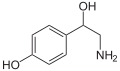 Octopamine chemical structure
 -
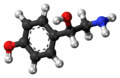 Ball-and-stick model of (S)-Octopamine
 -
 Synthesis pathway of Octopamine

-Octopamine_molecule_ball.png)

Advertise on WikiMD — 81,000+ full articles, ~900,000 total pages, ~250 million page views. Global reach, limited time promotional rates from $1/page/day. Learn more · View stats

Translate page: - East Asian
中文,
日本,
한국어,
South Asian
हिन्दी,
தமிழ்,
తెలుగు,
Urdu,
ಕನ್ನಡ,
Southeast Asian
Indonesian,
Vietnamese,
Thai,
မြန်မာဘာသာ,
বাংলা
European
español,
Deutsch,
français,
Greek,
português do Brasil,
polski,
română,
русский,
Nederlands,
norsk,
svenska,
suomi,
Italian
Middle Eastern & African
عربى,
Turkish,
Persian,
Hebrew,
Afrikaans,
isiZulu,
Kiswahili,
Other
Bulgarian,
Hungarian,
Czech,
Swedish,
മലയാളം,
मराठी,
ਪੰਜਾਬੀ,
ગુજરાતી,
Portuguese,
Ukrainian
About WikiMD • Contact • Disclaimer • Privacy • Copyright • Site statistics
Some content and images may originate from Wikimedia Commons or Wikipedia and remain subject to their stated licenses. Unless otherwise noted, eligible WikiMD content is available under CC BY-SA 4.0.
WikiMD Wellnesspedia — Free health & wellness information for patients, students, and health professionals.

