Emphysema

Editor-In-Chief: Prab R Tumpati, MD
Obesity, Sleep & Internal medicine
Founder, WikiMD Wellnesspedia &
W8MD's weight loss doctor NYC
Philadelphia GLP-1 weight loss and GLP-1 clinic NYC
| Emphysema | |
|---|---|
| File:Emphysema, centrilobular (4563270814).jpg | |
| Synonyms | N/A |
| Pronounce | N/A |
| Specialty | N/A |
| Symptoms | Shortness of breath, cough, wheezing |
| Complications | Pneumothorax, respiratory failure, cor pulmonale |
| Onset | Gradual |
| Duration | Long term |
| Types | N/A |
| Causes | Smoking, air pollution, alpha-1 antitrypsin deficiency |
| Risks | Tobacco smoking, exposure to air pollutants, genetic factors |
| Diagnosis | Pulmonary function test, chest X-ray, CT scan |
| Differential diagnosis | Chronic bronchitis, asthma, bronchiectasis |
| Prevention | Smoking cessation, avoiding air pollutants |
| Treatment | Bronchodilators, corticosteroids, oxygen therapy, lung volume reduction surgery |
| Medication | Inhaled bronchodilators, inhaled corticosteroids |
| Prognosis | Variable, depends on severity and management |
| Frequency | Common, especially in smokers |
| Deaths | N/A |
Emphysema is a chronic, progressive lung disease characterized by the damage of small air sacs in the lungs called alveoli. This damage leads to difficulty breathing, shortness of breath, and other respiratory symptoms. Emphysema is a major component of chronic obstructive pulmonary disease (COPD), a group of lung diseases that cause airflow blockage and breathing-related problems.
Causes[edit]
The primary cause of emphysema is:
- Smoking – Long-term smoking is the leading cause of emphysema, as it damages the alveoli and decreases lung function over time.
Other contributing factors include:
- Air pollution – Long-term exposure to polluted air may contribute to the development of emphysema.
- Alpha-1 antitrypsin deficiency – A genetic disorder that can cause emphysema, particularly in smokers.
Symptoms[edit]
Common symptoms of emphysema include:
- Shortness of breath
- Chronic cough
- Fatigue
- Wheezing
- Chest tightness
- Reduced exercise tolerance
- Weight loss
Diagnosis[edit]
Emphysema is typically diagnosed using the following tests:
- Spirometry – A non-invasive lung function test that measures the amount and speed of air a person can exhale.
- Chest X-ray – Can show signs of emphysema, such as hyperinflation of the lungs.
- Computed tomography (CT) scan – A more detailed imaging test that can provide a clearer picture of the lungs and detect early-stage emphysema.
Treatment[edit]
While emphysema is not curable, treatment can help alleviate symptoms and slow disease progression. Treatment options include:
- Smoking cessation – Quitting smoking is the most important step in treating emphysema.
- Bronchodilators – Medications that relax and open the airways, making it easier to breathe.
- Inhaled corticosteroids – Help reduce inflammation in the airways.
- Oxygen therapy – Supplemental oxygen can be prescribed for those with low blood oxygen levels.
- Pulmonary rehabilitation – A comprehensive program that includes exercise, education, and support to help improve lung function and overall well-being.
- Lung volume reduction surgery – A surgical procedure that removes damaged lung tissue, allowing the remaining healthy lung tissue to function more efficiently.
- Lung transplantation – In severe cases, a lung transplant may be considered as a treatment option.
Prevention[edit]
Prevention strategies for emphysema include:
- Avoiding smoking or quitting if you smoke
- Reducing exposure to air pollution
- Wearing protective gear in occupations with exposure to lung irritants
- Maintaining a healthy lifestyle, including regular exercise and a balanced diet
Emphysema images[edit]
-
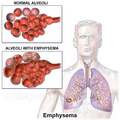 Diagram of emphysema
 -
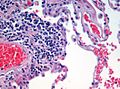 Histological section of emphysema
 -
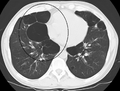 CT scan showing bullous emphysema
 -
Pneumothorax with bullae
-
 Giambattista Morgagni


See also[edit]
External links[edit]
– Emphysema (U.S. National Library of Medicine)
- American Lung Association – Emphysema Information and Resources
- World Health Organization – Chronic Respiratory Diseases


Medical Disclaimer: WikiMD is for informational purposes only and is not a substitute for professional medical advice. Content may be inaccurate or outdated and should not be used for diagnosis or treatment. Always consult your healthcare provider for medical decisions. Verify information with trusted sources such as CDC.gov and NIH.gov. By using this site, you agree that WikiMD is not liable for any outcomes related to its content. See full disclaimer.
Credits:Most images are courtesy of Wikimedia commons, and templates, categories Wikipedia, licensed under CC BY SA or similar.
Translate page: - East Asian
中文,
日本,
한국어,
South Asian
हिन्दी,
தமிழ்,
తెలుగు,
Urdu,
ಕನ್ನಡ,
Southeast Asian
Indonesian,
Vietnamese,
Thai,
မြန်မာဘာသာ,
বাংলা
European
español,
Deutsch,
français,
Greek,
português do Brasil,
polski,
română,
русский,
Nederlands,
norsk,
svenska,
suomi,
Italian
Middle Eastern & African
عربى,
Turkish,
Persian,
Hebrew,
Afrikaans,
isiZulu,
Kiswahili,
Other
Bulgarian,
Hungarian,
Czech,
Swedish,
മലയാളം,
मराठी,
ਪੰਜਾਬੀ,
ગુજરાતી,
Portuguese,
Ukrainian


.jpg)
