Oncom
Oncom is one of the traditional staple foods of West Javan (Sundanese) cuisine of Indonesia. It is a type of fermented food, bearing similarities to products like tempeh and tapai, both of which are also common in Indonesian cuisine.
Overview[edit]
Oncom is typically made from the byproducts of tofu or tempeh production. The process involves fermentation by several types of mold, such as Neurospora sitophila, Rhizopus oligosporus, or Mucor hiemalis. The end product is a foodstuff that is high in protein and fiber, and is often used in a variety of dishes in Sundanese cuisine.
Types of Oncom[edit]
There are two main types of oncom: red oncom and black oncom. Red oncom is typically made from the byproducts of tofu production, while black oncom is made from the byproducts of tempeh production.
Red Oncom[edit]
Red oncom, also known as oncom merah, is made by fermenting the press cake left over from the production of tofu. The press cake is mixed with rice bran and fermented with Neurospora sitophila. The end product is a red, firm, and slightly cheesy foodstuff.
Black Oncom[edit]
Black oncom, also known as oncom hitam, is made by fermenting the press cake left over from the production of tempeh. The press cake is mixed with rice bran and fermented with Rhizopus oligosporus or Mucor hiemalis. The end product is a black, firm, and slightly nutty foodstuff.
Uses in Cuisine[edit]
Oncom is used in a variety of Sundanese dishes. It can be fried, grilled, or used as an ingredient in dishes like sayur asem (a type of vegetable soup) and lotek (a salad made with steamed vegetables and a peanut sauce).
Health Benefits[edit]
Oncom is high in protein and fiber, making it a nutritious addition to the diet. It is also a source of probiotics due to the fermentation process, which can promote gut health.
See Also[edit]

-
Oncom
-
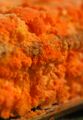 Oncom tekstur
 -
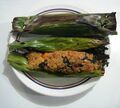 Pepes Oncom
 -
Makanan Khas Sunda


Medical Disclaimer: WikiMD is for informational purposes only and is not a substitute for professional medical advice. Content may be inaccurate or outdated and should not be used for diagnosis or treatment. Always consult your healthcare provider for medical decisions. Verify information with trusted sources such as CDC.gov and NIH.gov. By using this site, you agree that WikiMD is not liable for any outcomes related to its content. See full disclaimer.
Credits:Most images are courtesy of Wikimedia commons, and templates, categories Wikipedia, licensed under CC BY SA or similar.
Translate page: - East Asian
中文,
日本,
한국어,
South Asian
हिन्दी,
தமிழ்,
తెలుగు,
Urdu,
ಕನ್ನಡ,
Southeast Asian
Indonesian,
Vietnamese,
Thai,
မြန်မာဘာသာ,
বাংলা
European
español,
Deutsch,
français,
Greek,
português do Brasil,
polski,
română,
русский,
Nederlands,
norsk,
svenska,
suomi,
Italian
Middle Eastern & African
عربى,
Turkish,
Persian,
Hebrew,
Afrikaans,
isiZulu,
Kiswahili,
Other
Bulgarian,
Hungarian,
Czech,
Swedish,
മലയാളം,
मराठी,
ਪੰਜਾਬੀ,
ગુજરાતી,
Portuguese,
Ukrainian


