Oatcake
Oatcake is a type of flatbread similar to a cracker or biscuit, or in some versions takes the form of a pancake. They are prepared with oatmeal as a primary ingredient, and are sometimes enriched with other ingredients such as wheat.
History[edit]
The oatcake has a long history in Scotland, England and Ireland where oats have been a staple grain for centuries. The first recorded mention of oatcakes dates back to 1st century AD in Roman Britain. They were traditionally baked on a griddle or baked in an oven.
Varieties[edit]
There are many regional varieties of oatcakes. In Scotland, the Scottish oatcake is a popular type, often served with meals or as a snack. In England, the Staffordshire oatcake is a regional specialty of the Staffordshire area. It is a type of pancake made with oatmeal, flour and yeast. In Canada, the Acadian oatcake is a traditional dish of the Acadian people.
Preparation[edit]
Oatcakes are typically made by mixing oatmeal with a liquid such as water or milk and then adding salt. The mixture is then rolled out and cut into rounds. The rounds are then baked until crisp. Some recipes may also include sugar, baking powder, or other ingredients.
Nutritional Value[edit]
Oatcakes are high in fiber and can be a good source of slow release energy due to the complex carbohydrates in the oats. They can also be a good source of protein, especially when made with milk.
Cultural Significance[edit]
Oatcakes have a significant cultural importance in Scotland, where they are often served with meals or as a snack. They are also traditionally eaten on Burns Night, a celebration of the life and poetry of the poet Robert Burns.
See Also[edit]

-
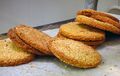 Oatcake
 -
 Making oat cakes - The costume of Yorkshire (1814)
 -
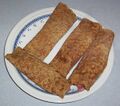 Oatcakes
 -
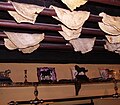 Oat cakes in the Beamish Museum
 -
 Girdledalgarven
 -
 Oatcakes Trangia
 -
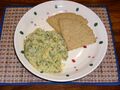 Clapshot and oatcakes
 -
 Oat cakes, Ulster American Folk Park
.jpg)
,_plate_IX,_opposite_21_-_BL.jpg)


Medical Disclaimer: WikiMD is for informational purposes only and is not a substitute for professional medical advice. Content may be inaccurate or outdated and should not be used for diagnosis or treatment. Always consult your healthcare provider for medical decisions. Verify information with trusted sources such as CDC.gov and NIH.gov. By using this site, you agree that WikiMD is not liable for any outcomes related to its content. See full disclaimer.
Credits:Most images are courtesy of Wikimedia commons, and templates, categories Wikipedia, licensed under CC BY SA or similar.
Translate page: - East Asian
中文,
日本,
한국어,
South Asian
हिन्दी,
தமிழ்,
తెలుగు,
Urdu,
ಕನ್ನಡ,
Southeast Asian
Indonesian,
Vietnamese,
Thai,
မြန်မာဘာသာ,
বাংলা
European
español,
Deutsch,
français,
Greek,
português do Brasil,
polski,
română,
русский,
Nederlands,
norsk,
svenska,
suomi,
Italian
Middle Eastern & African
عربى,
Turkish,
Persian,
Hebrew,
Afrikaans,
isiZulu,
Kiswahili,
Other
Bulgarian,
Hungarian,
Czech,
Swedish,
മലയാളം,
मराठी,
ਪੰਜਾਬੀ,
ગુજરાતી,
Portuguese,
Ukrainian

